PERSPECTIVES REVISITED: Proposed school history syllabus focuses on Africa as the main story, not a sidebar to Western history
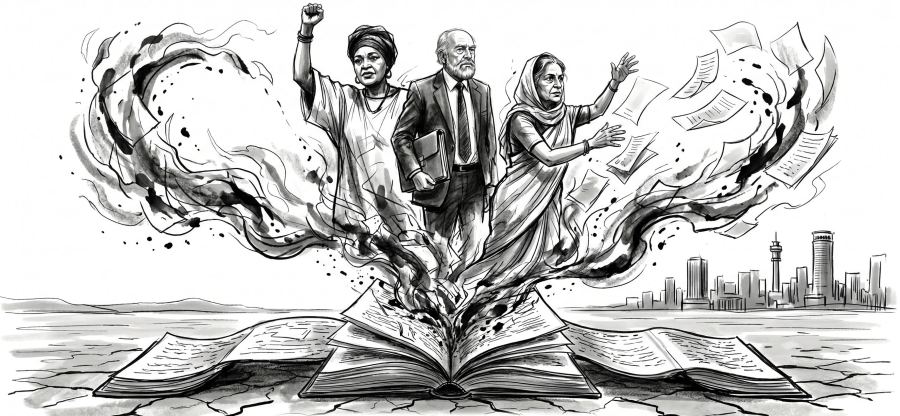
The move from the old curriculum is contentious, but is also a necessary and useful redirection.
The move from the old curriculum is contentious, but is also a necessary and useful redirection.
An Afrocentric curriculum, which will displace the Eurocentric curriculums generations of South Africans have been socialised into, will help learners understand that communities and kingdoms in Africa were sophisticated, innovative and had global connections long before the colonial era. This is fundamentally different from what any school history curriculum in South Africa has ever foregrounded.
But the proposed curriculum is the outcome of nearly a decade of work by a ministerial task team of seasoned and respected academic historians, an archaeologist and history education specialists, who consulted widely while keeping abreast of the recent historiography on Africa, as well as the latest research in history education.
In learning an Afrocentric history, learners and teachers will be expected to engage deeply with a range of historical evidence, including written and oral sources, and archaeological evidence, to answer key questions. In short, learners will leave school able to think historically using historical evidence in an Afrocentric manner, while understanding that history is a construction with which one can engage critically and analytically, and while developing a sense of dignity, pride and an appreciation of the resilience of historical figures.
But it also opens opportunities not completely borne out in the curriculum document with regard to language, sourcing and pedagogy. Language emerges as an immediate opportunity and challenge: how are we to realise the ideals of the draft curriculums if only one language is spoken in the classroom? The curriculum indirectly offers some historical sourcing solutions to this: oral histories (defined as oral traditions and oral testimonies), in their various African languages, allow indigenous knowledges such as izibongo, maboko (poems), diane (proverbs), dipina (songs) and iziduko to be considered as historical sources within the actual curriculum.
This brings indigenous knowledges meaningfully into the curriculum, but indigenous knowledges are not extensively used in the content sections or in the suggestions for assessment for learning.
Sources in indigenous languages will be important in living the oral tradition idea of the curriculum in the classroom, but it will require resources from the Department of Basic Education to make these sources widely accessible to all schools and will require intensive teacher training. This resourcing and teacher training would also have to engage issues of langu
📌 Kaynak
Bu özet Daily Maverick (ZA) kaynağından otomatik derlenmiştir. Tamamı için orijinal habere gidin.
Orijinal haberi oku →