'China Can Make Special Contributions in the Next Decade,' Says Former UN Official on AI and Robotics
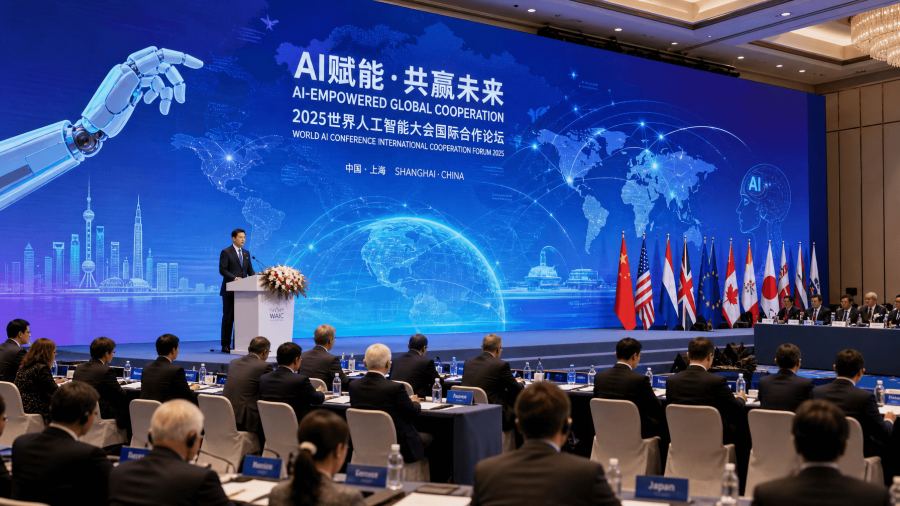
In an extensive dialogue hosted by Chongyang Institute for Financial Studies at Renmin University as part of the Mingde Strategic Dialogue series, Sam Daws — a former senior UN official and current Director of the Project on Peace, Security, and AI at Oxford — shared his perspectives on China's role in shaping the global AI and robotics landscape over the next decade. Daws identified China as being in a "global leading position" in humanoid robotics and embodied AI, noting th
In an extensive dialogue hosted by Chongyang Institute for Financial Studies at Renmin University as part of the Mingde Strategic Dialogue series, Sam Daws — a former senior UN official and current Director of the Project on Peace, Security, and AI at Oxford — shared his perspectives on China's role in shaping the global AI and robotics landscape over the next decade. Daws identified China as being in a "global leading position" in humanoid robotics and embodied AI, noting that while the United States maintains an edge in advanced chip design, China's distinctive advantage lies in integrating embodied intelligence with advanced manufacturing through its "AI+" initiative. On the question of AI in modern warfare, Daws warned against what he called "the illusion of algorithmic precision," stressing that battlefield environments are inherently uncertain, with incomplete data and dynamic conditions. He called for meaningful human control, rigorous real-world testing, and clear accountability mechanisms for any AI system deployed in military contexts. The conversation shifted to the Global South's digital sovereignty aspirations. Daws observed that middle powers consistently reject binary choices between technology blocs, instead demanding trustworthy infrastructure, affordable computing power, interoperable standards, and localized AI capabilities. He cited Kazakhstan's development of KazLLM, a Kazakh language large model, as an example of successful local AI development. On embodied AI and humanoid robotics, Daws emphasized that the transition from "information-only AI" to "agentic AI" — systems capable of performing complex tasks autonomously or semi-autonomously — presents both opportunities and risks. He highlighted the potential for China-Japan-South Korea trilateral cooperation on humanoid robot standards and China's ongoing discussions with ASEAN and the EU on robotics interoperability. Daws also stressed the importance of closing the AI divide for the Global South, advocating for layered governance approaches that protect core security interests while maintaining openness and multilateral cooperation in AI safety, scientific standards, climate applications, and capacity building. He identified the United Nations Industrial Development Organization (UNIDO) as a key platform for industrial upgrading in the AI era. The dialogue underscored China's growing influence in setting global standards for embodied AI and humanoid robotics as the world transitions toward increasingly autonomous intelligent systems.
📌 Kaynak
Bu özet Pandaily kaynağından otomatik derlenmiştir. Tamamı için orijinal habere gidin.
Orijinal haberi oku →