Anguished Parents, Crying Doctors: Life Amid Utah’s Measles Outbreak
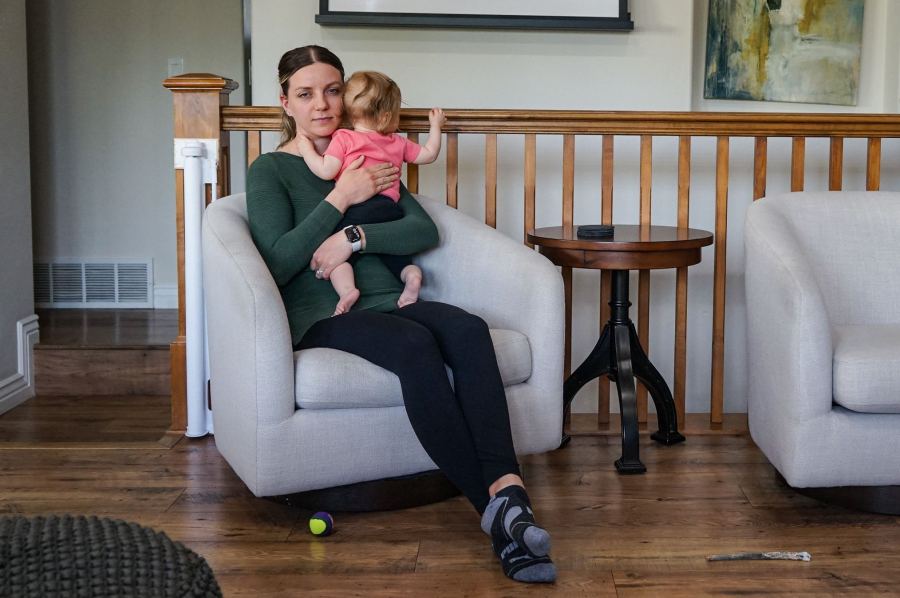
The state’s outbreak means adapting to America’s new reality, in which vaccine-preventable diseases become common again.
Ben Dowse hadn’t expected to treat measles when he became a doctor, but there he was, examining a newborn exposed to the virus in the womb. The infected mother had given birth just hours earlier. The hospital had alerted Dowse to the case before delivery, and he’d braced himself for the worst.
Dowse wore a full-body protective suit with a plastic face mask. As a pediatrician in southern Utah, he couldn’t risk getting even a mild infection, because many of his patients are babies too young for measles vaccines or children whose parents choose not to protect them with immunizations. “I went in looking like a scientist in E.T.,” he said.
Measles can cause brain damage, deafness, or death in newborns. If the baby entered the world with a measles rash and fever, Dowse was prepared to give the infant a spinal tap to assess the risk of neurological damage.
Luckily, flushed and crying, the baby looked healthy. To keep it that way, Dowse wanted to inject the baby with concentrated antibodies against the measles virus. To his surprise, the parents objected, promising to give their child “all kinds of vitamin A,” Dowse said. He begged them not to, saying, “You can’t see it on the surface, but the baby’s body is fighting the measles.” They were afraid of vaccines, so Dowse explained that antibodies were different and that they would stop measles from replicating in the infant.
“That shot is going to basically give the baby ammo to fight,” Dowse said.
The parents relented. A couple of days later, they left the hospital with a child who had narrowly skirted an infection that killed many thousands of babies a century ago. Nonetheless, Dowse said he doubted they would be returning for childhood vaccinations to protect their baby against a bevy of illnesses. Like more than a dozen Utah doctors and health officials who spoke with KFF Health News, Dowse has adjusted his expectations.
He is part of a reluctant cohort of medical professionals now on the front line of America’s regressive next chapter in health history, one in which dangerous and preventable diseases return.
“I wish that people could see what I see,” said Nathan Money, a hospital pediatrician in Utah whose eyes welled up with tears as he described children he has treated for measles struggling to breathe. “This train is going in the wrong direction, and it can feel like a helpless situation, because we’re just not seeing the public messaging and leadership that’s needed to turn this around.”
Since measles was deemed eliminated in the US a quarter century ago, public health workers have extinguished sp
📌 Kaynak
Bu özet Wired kaynağından otomatik derlenmiştir. Tamamı için orijinal habere gidin.
Orijinal haberi oku →