MIT’s new spacecraft engine could send tiny satellites to Mars
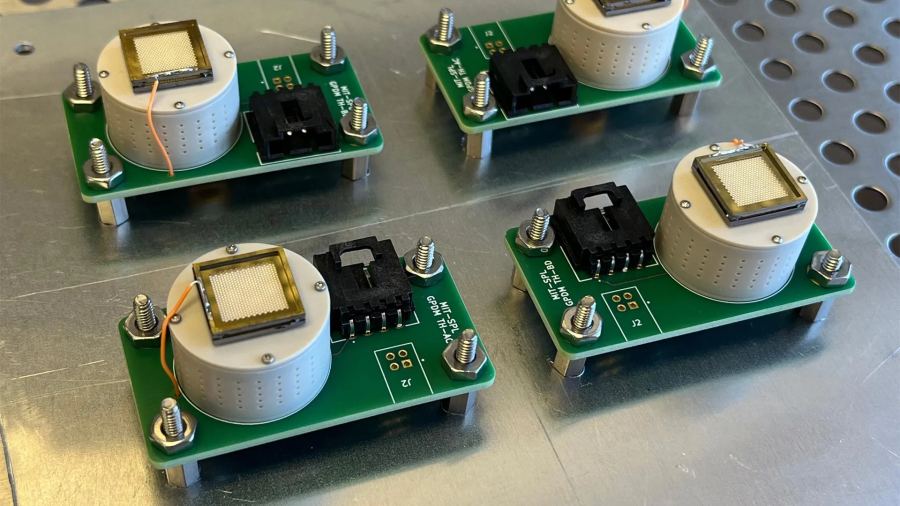
MIT researchers have shown that one fuel can power both chemical and electric spacecraft thrusters, potentially transforming what small satellites can do. The approach combines quick bursts of speed with highly efficient long-range propulsion in a single compact system. A NASA-supported CubeSat mission will soon test the technology in orbit.
MIT engineers are developing a new spacecraft propulsion system that combines the strengths of traditional chemical rockets with the efficiency and precision of electric thrusters.
The technology could give small satellites far greater flexibility in space. Instead of relying on separate fuel systems for different types of maneuvers, future spacecraft could use a single propellant to perform both rapid movements and slow, highly controlled adjustments.
At the center of the approach is a specialized fuel that works with both chemical and electric propulsion systems. Until now, these technologies have typically required separate propellants and hardware, adding weight and complexity.
"If you can have chemical and electrical propulsion in one small package, it's the best of both worlds," says Amelia Bruno, a former postdoc in MIT's Department of Aeronautics and Astronautics (AeroAstro). "This opens the door for small satellites to do even more science, more observations, and more interesting missions, all on a smaller and cheaper platform."
Bruno is the lead author of a new study published in the Journal of Propulsion and Power. The research demonstrates that a "green monopropellant" originally developed by the U.S. Air Force for chemical propulsion can also successfully power miniature electric thrusters known as electrospray thrusters.
Electrospray thrusters are tiny rocket engines, roughly the size of a dime. They use electric fields to charge particles in a liquid propellant and then eject those particles into space, creating thrust.
These thrusters are extremely fuel-efficient and are well suited for gradual, precise maneuvers. For example, they can slowly push a spacecraft through long interplanetary journeys while consuming very little fuel.
Chemical thrusters serve a different purpose. They deliver powerful bursts of thrust that allow spacecraft to quickly accelerate, decelerate, climb, descend, or change position.
By identifying a propellant capable of powering both systems, MIT researchers believe they can significantly expand the capabilities of small satellites.
The team is currently working with NASA on the Green Propulsion Dual Mode mission, a briefcase-sized CubeSat equipped with one chemical thruster and four electrospray thrusters. All of them will draw fuel from a single tank. The mission will be the first attempt to test this type of dual-mode propulsion system on a small spacecraft.
If successful, the technology could help small satellites venture far beyond Earth orbit.
"We could send CubeSats to Mars, or the asteroid belt, w
📌 Kaynak
Bu özet ScienceDaily Tech kaynağından otomatik derlenmiştir. Tamamı için orijinal habere gidin.
Orijinal haberi oku →