Deep-sea sponges survive in complete darkness in ways we didn’t know before
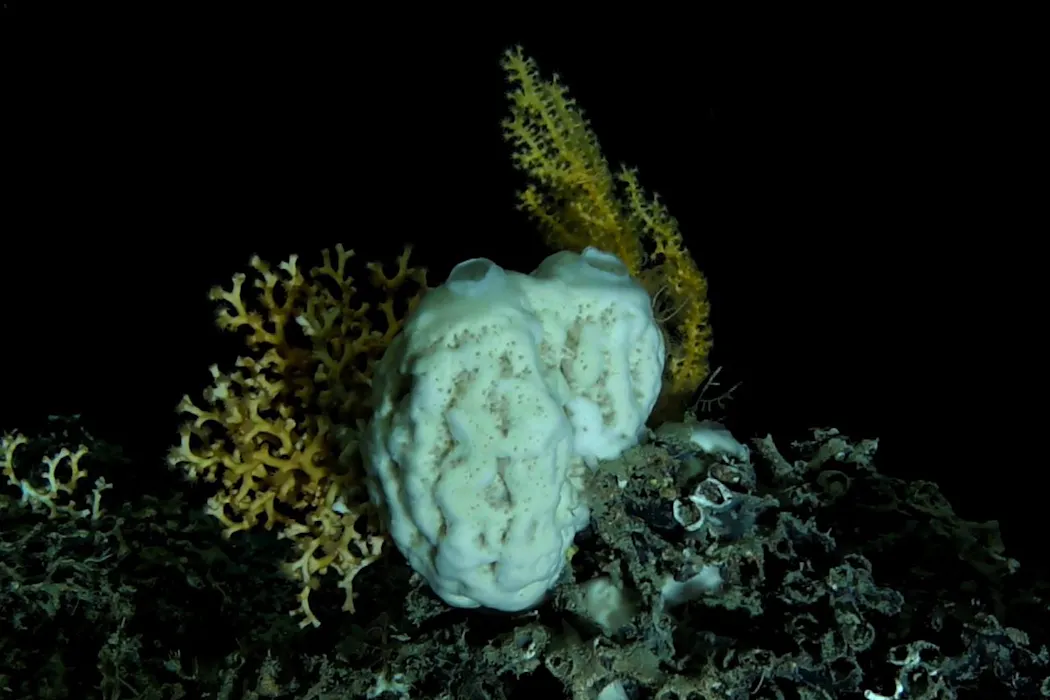
The deep-sea sponge _Calyx_ sp. in its natural habitat. PROBIO-DEEP/Fugro When we think of marine life, we usually picture colourful coral reefs or dense seaweed forests filled with fish and other critters. The ocean that comes to mind is the one touched by sunlight. However, most of the ocean is not like that. By volume, roughly 95% of the ocean consists of the permanently dark, cold deep sea . Despite such hostile conditions though, there is life in the ocean’s abyss. Deep-
Scientists have uncovered novel survival strategies employed by deep-sea sponges in the ocean's perpetually dark abyss. These sponges, which form extensive ecosystems and support other marine life, host diverse microbial communities. While some of these microbes utilize chemosynthesis, deriving energy from chemical reactions using carbon dioxide, new research reveals a significant portion of the sponge's microbial partners rely on heterotrophy. This means they consume organic matter for energy, a process previously thought to be less viable in the nutrient-scarce deep sea.
Understanding these unique deep-sea survival mechanisms is crucial for comprehending the full extent of life's adaptability and the complex functioning of Earth's largest, yet least explored, biome.
📌 Kaynak
Bu özet The Conversation AU kaynağından otomatik derlenmiştir. Tamamı için orijinal habere gidin.
Orijinal haberi oku →