He was making a film about our shameful Nazi past – then the present intervened
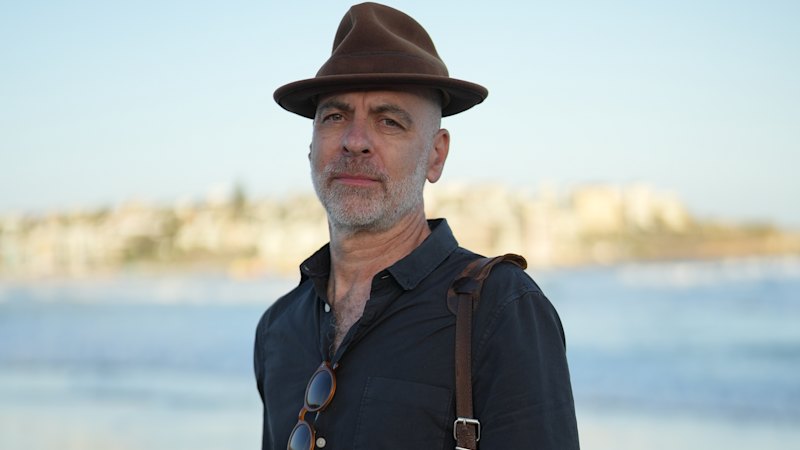
Dan Goldberg had almost finished his SBS documentary The Hunt For Australia’s Last Nazis – then the Bondi massacre happened.
Dan Goldberg was close to finishing his SBS documentary The Hunt For The Last Nazis – which he had thought was a story about “Australia’s shameful past” – when the massacre at Bondi Beach happened. Suddenly and horrifically, he says, “the present and the past collided”.
The next three or four weeks after the deadly attack in December “were a blur”, says the former editor of The Australian Jewish News as he slipped back into journalist mode, filing stories for his former paper Haaretz in Israel.
By the time he got back to his film in early January, he had to work out how to handle what he calls “the elephant in the room” – the events of December 14, 2025, when two men shot into the Chanukah by the Sea gathering at Bondi, leaving 15 people (plus one of the gunmen) dead, and another 40 injured.
“My first instinct was no, it’s a different story, it’s a different time, it’s a different place, it’s a different context, it’s too fresh, it’s too raw, it’s too confronting,” he says. “And then one of my producers said, ‘Dan, can you please explain the difference between 850 Jews massacred in Soviet-occupied Ukraine in 1942 and Jews massacred on Bondi Beach in 2025?’”
Whatever the complexities of the ongoing conflict in Gaza and the Israeli government’s response to the October 2023 terror attack by Hamas, The Hunt For The Last Nazis does a tremendous job of giving voice to the sense of vulnerability Australian Jews have long felt in this country, and the very solid reasons they have for feeling it.
Goldberg’s film is principally concerned with the fact that among the displaced persons Australia accepted from Europe after World War II, more than 4000 of them were former Nazis.
“Thousands of people who had Nazi pasts were able to come through Australia’s flimsy security screening at this time because we had an open-door policy and were more concerned about building the nation than we were about people’s histories,” says academic Ruth Balint in the film.
Our immigration policy at the time was underpinned by the dual fear of communism and the perceived threat of Asian expansionist ambitions.
“The mantra ‘populate or perish’ really became Australia’s post-war immigration agenda,” Balint says. “This was a program built not on humanitarianism but on pragmatism.”
It was also built, adds historian Jayne Persian, on blatant racism.
“Immigration officers were explicitly told not to select Jews,” she says in the documentary. “Nationalities were ranked, with Balts [people from the Baltic states of Latvia, Lithuania, Estonia] at the top and Jews at the bottom.”
There
📌 Kaynak
Bu özet Sydney Morning Herald kaynağından otomatik derlenmiştir. Tamamı için orijinal habere gidin.
Orijinal haberi oku →