Don’t tell young people to walk away from university. For many, it’s the only way
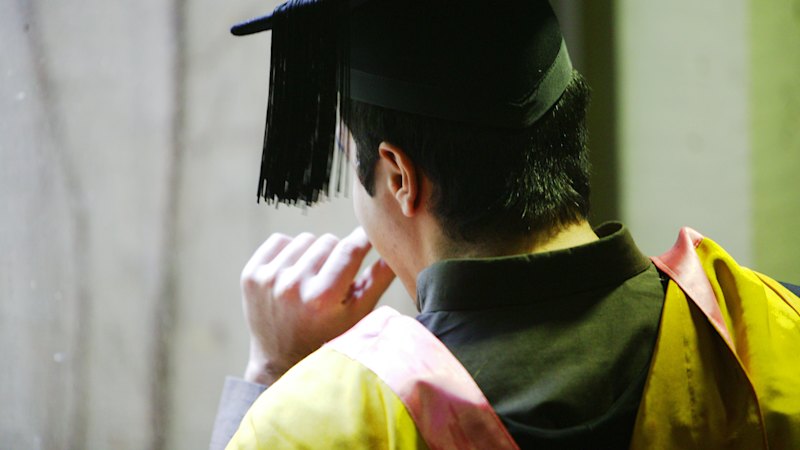
For students without inherited privilege, a university degree is their only lever.
I’ve spent my career in university classrooms and online learning environments. I’ve watched students arrive uncertain and leave capable, articulate and ready for the world. I’ve seen the moment a first-in-family student realises they belong.
I’ve also spent over a decade dealing with academic misconduct and, more recently, at the centre of what generative AI is doing to higher education.
So yes – the problems being described right now are real. But what concerns me more than cheating is what we are starting to say in response to it.
Where the argument goes wrong is when that personal advice is extended to a generation: wait, opt out, come back later when things have settled. That is not neutral. It risks doing real harm.
Because for many young Australians, university is not an optional extra. It is the only route through to their chosen profession.
If you want to be a nurse, a teacher, an engineer, a social worker, then there is no side door. And every year spent waiting is not a holding pattern; it is a year of lost momentum, lost income and delayed entry into a profession. For students without networks or inherited advantage, a degree remains the most reliable lever they have. Advice to “hold off” will not land evenly. It will land hardest on those who can least afford it.
The AI problem is real. No one working seriously in this space is denying that. But the claim that universities are simply cashing cheques and turning a blind eye is not the full picture.
The sector is not standing still. It is in the middle of a significant transformation.
Long before ChatGPT arrived, many of us knew that traditional assessment (take-home tasks, unsupervised online exams) was increasingly vulnerable and, in some cases, no longer doing the job. AI didn’t create that weakness. It exposed it.
What we are now doing, across the sector, is shifting from assessing what students submit to assuring what they actually know, can do and have become.
That means more conversations, more demonstrations, more occasions where students have to show up, and think and do things in real time. It means designing assessment so that learning must reside in the student themselves, not just in the artefact they hand in.
It is not quick. It is not easy. And it is certainly not cheap. But it is happening.
And yes, it also means moving away from some of the practices that proliferated when teaching, learning and assessment were pushed online during the pandemic, remembering that it was a shift made under public health direction rather than as a voluntary experiment in efficiency.
📌 Kaynak
Bu özet Sydney Morning Herald kaynağından otomatik derlenmiştir. Tamamı için orijinal habere gidin.
Orijinal haberi oku →