Faster, longer, more comfortable flights by 2026? We’re still waiting
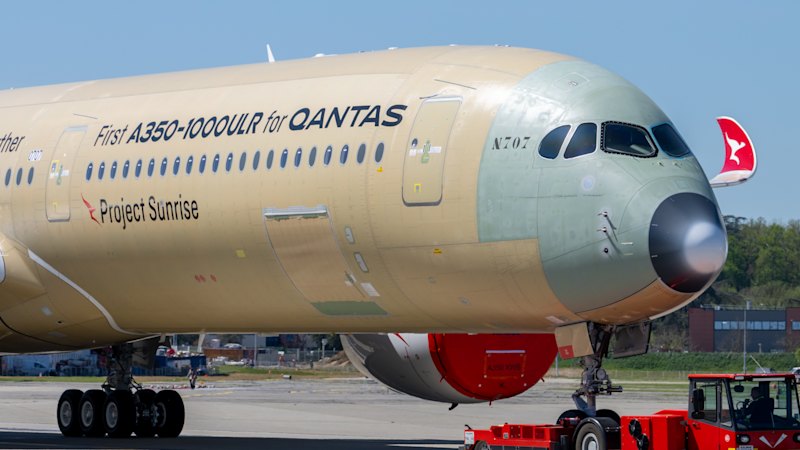
As Qantas delays the launch of its ultra-long-haul flights to London and New York yet again, here are some of the other air travel promises we’re still waiting to be delivered.
Despite some giant strides – more fuel-efficient aircraft, an ever-improving safety record, cheaper airfares in real terms – the aviation industry has pressed the pause button in some ways that matter.
A Boeing 787-10 flies no faster than a Boeing 707 did in the 1960s. With a few notable exceptions such as the Anglo-French Concorde, jet-powered passenger aircraft have not changed much since the de Havilland Comet, the world’s first jet passenger aircraft, which entered service in the 1950s.
Back then, the expectation was that air travel would become faster and smoother, but instead many routes are actually slower than they once were because airports, skies and aircraft themselves are more congested. Here’s a rundown of some of the air travel innovations that were supposed to be here by now, but aren’t.
Qantas has just announced another delay in its Project Sunrise flights, the non-stop service linking east coast Australia with London and New York. A dream of Qantas chiefs for almost a decade, the Sydney-London flight will be the world’s longest scheduled non-stop flight when it finally takes off.
The national carrier was expecting to take delivery of the Airbus A350-1000ULRs specially designed for the routes in October, with scheduled services to begin early in 2027, but delays attributed to supply chain issues have pushed back the delivery date. The first of these ultra-long-range aircraft is now expected to arrive in April 2027. The start-up date for Project Sunrise services is now November of that year.
Concorde was supposed to be the precursor of a brave new world of aviation that would whisk passengers from Melbourne to London in 16 hours. Instead, it became a glamorous trophy-cabinet product for celebrities and CEOs. Tickets were wildly expensive, its fuel consumption was enormous, bans on sonic booms over land strangled its routes and crippling operating costs ensured Concorde survived as a flagship vanity project, and never as a viable revenue earner.
Following Concorde’s retirement in 2003, there have been moves to build a new generation of quieter, cheaper and more fuel-efficient supersonic aircraft such as the 55-seat Overture jet that Boom Technology is developing and the Lockheed Martin X-59 QueSST, but obstacles remain.
The sonic boom generated by supersonic aircraft limits them to overwater routes. The jet engines that power these aircraft use far more fuel than conventional turbo-fan jet engines, and they fly higher in the troposphere, where jet engine emissions have a greater environmental impact. Unless a supersonic aircraft was
📌 Kaynak
Bu özet Sydney Morning Herald kaynağından otomatik derlenmiştir. Tamamı için orijinal habere gidin.
Orijinal haberi oku →