Nigeria: Special Report - Inside Sokoto's Fight Against Polio Vaccine Hesitancy
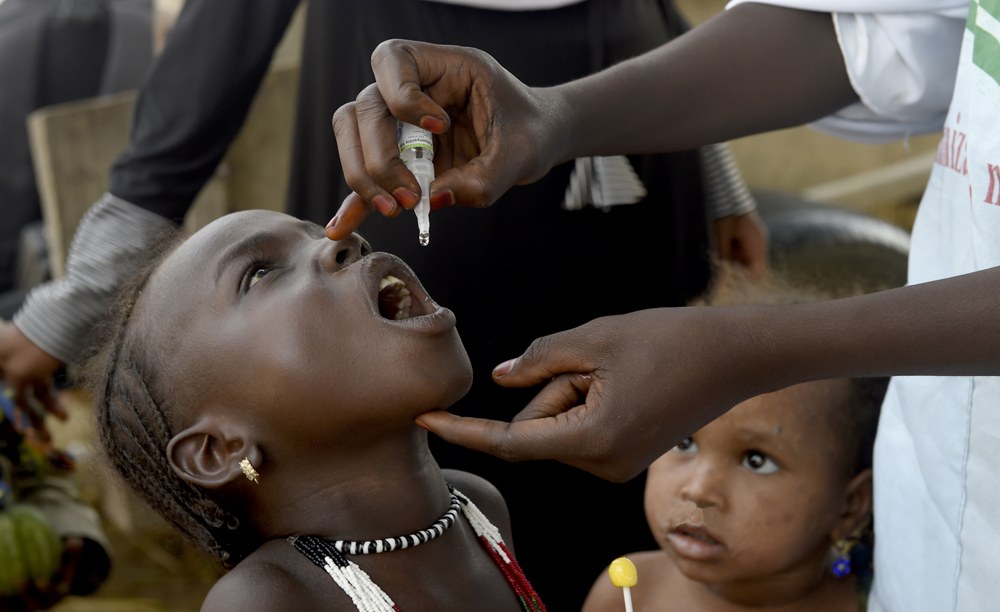
[Premium Times] Volunteer Community Mobilisers (VCMs), traditional rulers, and other volunteers have formed a line of defence in communities, helping track and identify unvaccinated children and report suspected polio cases.
Volunteer Community Mobilisers (VCMs), traditional rulers, and other volunteers have formed a line of defence in communities, helping track and identify unvaccinated children and report suspected polio cases.
Little Karima held her father, Muhammad Nasiru's arm, struggling to keep pace with him. Her flowing gown obscures her uneven gait -the way she swings one leg and limps with the other.
The father raised her gown as they walked some more, exposing her dusty legs from knee to ankle. One of Karima's legs is stiff and bent.
Until mid-last year, Karima's legs were straight, and she already walked well at one year and six months old. But her gait began to change. One of her legs had become stiff, and the little girl was limping.
At the time, the Surveillance Focal Person at the Primary Healthcare Centre, Kajiji, Shagari Local Government Area (LGA), Sokoto State, Mubarak Umar, suspected a case of polio. He took the girl's samples -faeces and urine- and those of other children in the neighbourhood and sent them to the Ibadan National Polio Laboratory (Ibadan NPL) for a test.
Karima's result came back positive for circulating Vaccine-Derived Poliovirus type 2 (cVDPV2), a strain of the Wild Polio Virus (WPV) currently endemic in Nigeria. The cVDPV2 is found among populations with low herd immunity. It has caused more polio cases annually than the wild poliovirus since 2017, according to the World Health Organisation (WHO).
Although Nigeria had been declared polio-free since 2020, the country has battled the spread of the cVDPV2 variant in the North-west states, including Kebbi, Sokoto and Zamfara. The situation has persisted due to low routine immunisation coverage, population movement and vaccine hesitancy.
Mr Nasiru insisted all of his children, including Karima, were vaccinated and didn't know how his daughter contracted the disease. But multiple sources, including immunisation officers and traditional rulers in the community, said Mr Nasiru's household was known for rejecting vaccinations. Karima's test results, seen by our reporter, indicate 'unknown' for all other vaccines she ought to have taken at that age.
The refusal of vaccines remains one of the biggest challenges facing the eradication of polio, the Sokoto State's Immunisation Officer (SIO), Bashar Garba, told PREMIUM TIMES.
Although there have been more suspected cases in other LGAs, Mr Garba said vaccine hesitancy is more prevalent in metropolitan areas, comprising three LGAs -- Sokoto North, Sokoto South and Wamakko. They have recorded the highest level of non-compliance in polio vacci
📌 Kaynak
Bu özet AllAfrica kaynağından otomatik derlenmiştir. Tamamı için orijinal habere gidin.
Orijinal haberi oku →