China’s AI Stack Is No Longer Catching Up — It’s Setting the Pace
For years, the narrative around China’s AI industry was framed as a race to close the gap with the West — faster chips, bigger models, more data. But a quiet shift has occurred. Judging by the numbers coming out of OpenRouter and the engineering choices behind DeepSeek V4, that framing is now out of date. China’s AI ecosystem hasn’t just caught up. In key dimensions, it has moved ahead — and it’s built on a foundation that is architecturally distinct from anything Silicon Val
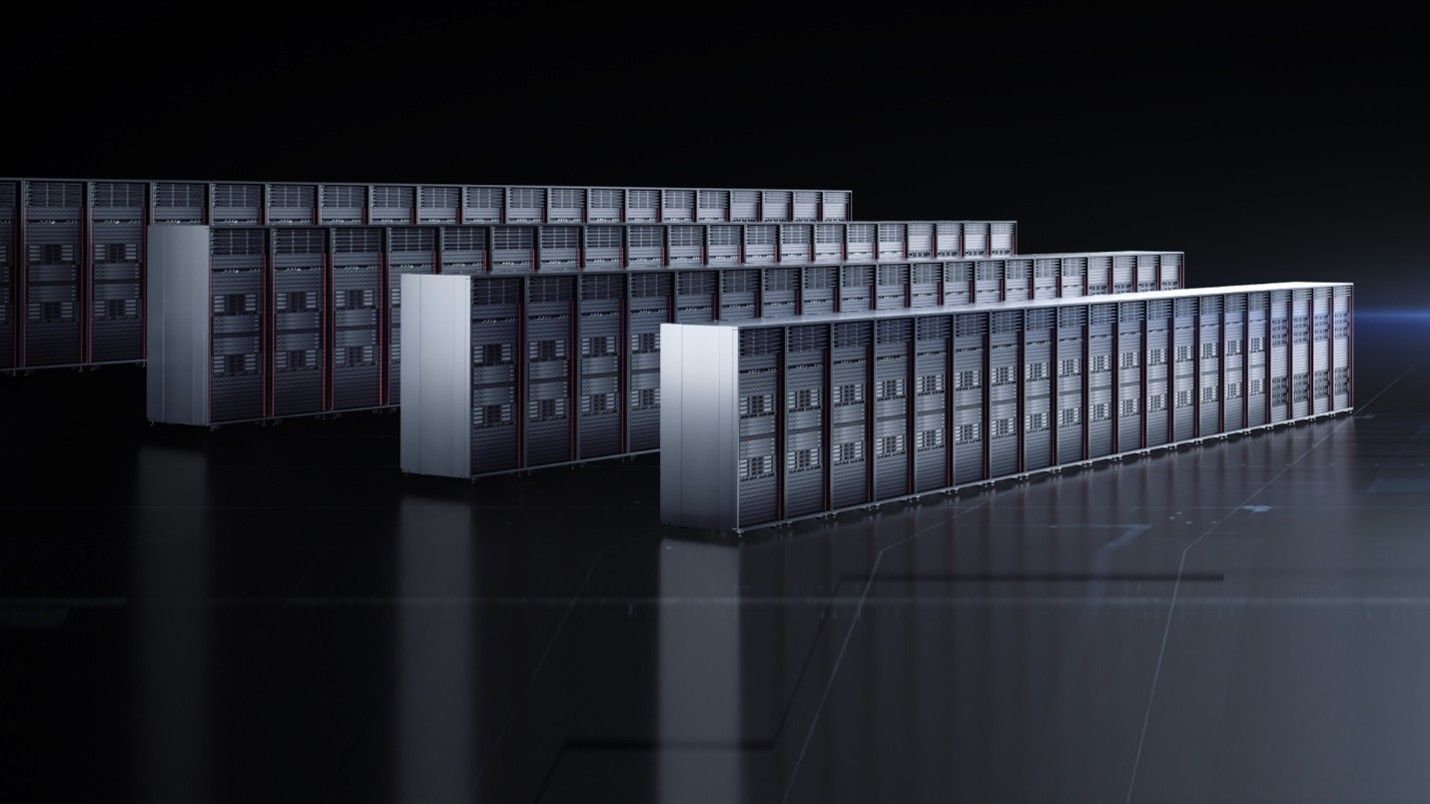
For years, the narrative around China’s AI industry was framed as a race to close the gap with the West — faster chips, bigger models, more data. But a quiet shift has occurred. Judging by the numbers coming out of OpenRouter and the engineering choices behind DeepSeek V4, that framing is now out of date. China’s AI ecosystem hasn’t just caught up. In key dimensions, it has moved ahead — and it’s built on a foundation that is architecturally distinct from anything Silicon Valley has produced. The Token Consumption Tells the Story The clearest signal of China’s AI maturity is usage data. According to continuous tracking from OpenRouter throughout March and April 2026, Chinese large models have consistently ranked first globally in weekly token consumption for multiple consecutive weeks. In the week of March 9, Chinese model companies claimed the top two spots in the platform’s monthly statistics for the first time. By early April, all six of the top-ranked global models were Chinese. To put that in context: China’s daily token consumption has surged from roughly 100 billion to 140 trillion. That’s not the kind of growth you see from researchers running experiments. That’s what AI becoming infrastructure looks like — the same category as electricity or broadband, not a demonstration project. The significance of that scale goes beyond bragging rights. Token consumption is a proxy for economic integration. Every enterprise workflow automated, every developer tool powered, every consumer product enhanced — each generates usage that feeds back into model improvement and ecosystem depth. At 140 trillion tokens a day, Chinese AI companies are accumulating real-world training signal and deployment experience at a pace that is very difficult to replicate from behind. While much of the Western tech industry is still debating when AI applications will become real, in China, the answer is already embedded in the daily usage numbers. DeepSeek V4 Changes the Chip Conversation The release of DeepSeek V4 was a technical milestone, but perhaps not for the reason most people assume. Yes, the model’s capabilities are impressive. But the more significant story is what happened at the infrastructure level. When Huawei announced full support for DeepSeek V4 at the same moment the model launched, it shattered a long-standing assumption in the industry: that Chinese chips were perpetually a half-step behind, requiring adaptation work after the fact. The “release-as-launch” model turned that assumption on its head. This wasn’t a transplant-and-adapt process. DeepSeek V4 and the Atlas SuperPoD product were co-designed — the model’s fine-grained Expert Parallel (EP) architecture was built with the hardware in mind from the start. As DeepSeek’s technical report states in Section 3.1: “We have verified this fine-grained expert parallel scheme on both the NVIDIA GPU and Huawei Ascend NPU platforms.” The scheme splits MoE experts into waves and continuously overlaps computation, dispatch, and result-sending — delivering a 1.5x to 1.73x performance improvement on the Atlas SuperPoD product, with gains reaching up to 1.96x on latency-sensitive RL rollouts. That’s not “usable.” That’s a performance advantage. To appreciate why this matters, consider how NVIDIA built its dominance. It wasn’t just chips — it was two decades of models, frameworks, and libraries all optimized for NVIDIA hardware, creating a self-reinforcing loop where the best models ran best on NVIDIA. DeepSeek V4’s co-design with the Atlas SuperPoD product is the first convincing evidence that China is building its own version of that loop — and that it’s already producing results. For a global AI industry that has grown accustomed to NVIDIA as the only serious option, this represents a genuine alternative — one that is no longer theoretical. The System Shift: From Stacking Chips to SuperPoD Understanding why this matters requires stepping back from individual chip specs and looking at how large-scale AI training and inference actually work. The bottleneck in modern AI computing is no longer single-chip performance. It’s cluster efficiency. When you’re running clusters of thousands — or tens of thousands — of accelerators, two problems dominate: Communication overhead. Data synchronization across chips introduces latency that eats into raw computing power. The larger the cluster, the worse the linear speedup ratio degrades. Memory constraints. Large MoE models have parameter counts that no single chip can hold. That requires cross-node unified addressing and efficient memory access at the system level. No matter how fast a single chip runs at peak, the cluster’s bottleneck brings the effective throughput down to the weakest link. This is why the industry’s competitive focus has shifted from “peak FLOPS per chip” to “effective throughput per cluster.” Simply buying and stacking m
📌 Kaynak
Bu özet Pandaily kaynağından otomatik derlenmiştir. Tamamı için orijinal habere gidin.
Orijinal haberi oku →