The dark truth about hotel slippers
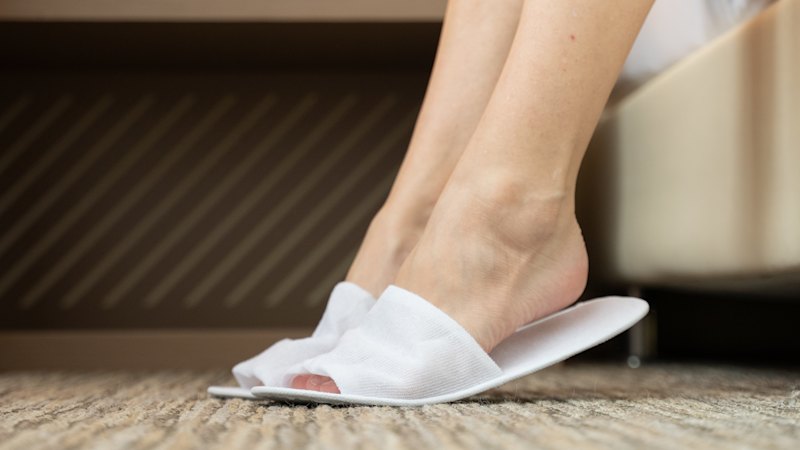
I never wear them. But the housekeepers in every hotel I stay in continue to unwrap them from their plastic coverings and put them by my bed regardless.
At almost every hotel room I’ve stayed in, from those in low-cost chain hotels to ultra-luxury palaces, housekeepers place slippers by my bed at turn-down time.
It’s a customary health and safety practice, but not a regulation, to prevent guests slipping in the bathroom.
In my experience, though, I’m more likely to slip when wearing them. They usually come in two sizes, “his” and “hers”, and I rarely find a pair to fit, as my size is half-way in between.
The flimsy ones can fold under your feet or slide off, making them hazardous when you’re not paying attention.
So, I never wear them. But the housekeepers in every hotel I stay in continue to unwrap them from their plastic coverings and put them by my bed regardless.
Fabric slippers are ubiquitous in the hospitality industry and that includes many spas, where slippers are provided for the three steps between chair and massage table and then thrown in the bin. It’s ridiculous.
With a 100 per cent polypropylene upper and a sole made from ethylene-vinyl acetate, disposable slippers are not meant to be washed or recycled. They can take up to 1000 years to degrade in landfill.
And yet luxury hotels in the US discard about 10.5 million pairs of slippers every month. That’s 126 million pairs a year, according to an investigation by London’s Times.
When the space aliens arrive in 3026, they’re going to wonder what was wrong with our feet.
The egregious use of disposable slippers is just one of the unsustainable things that hotels still practice, even in an age when they’re touting their green credentials.
The worldwide hotel industry is a major textile consumer because of its exacting standards for pristinely clean bed linens and towels, and because of the rapid growth of new hotels, requiring massive investment in new furnishings for builds, renovations and refreshes.
It is one of the main contributors to water usage and the overwhelming amounts of textile waste generated around the globe every year.
Textiles have a staggeringly low recycling rate. Currently, only one per cent of all garments and homeware fabrics are recycled to high quality. The first world dumps them on the developing world, as aerial images of the Atacama Desert and the beaches of Ghana show.
Hotels asking guests to agree to not changing the sheets every day seems like too little in this context.
In some hotels, there’s a card placed on the pillow that suggests if you don’t want the sheets to be changed that day, you need to place the card on the bed. Or don’t place the card on the bed if you do want the sheets to be changed.
📌 Kaynak
Bu özet Sydney Morning Herald kaynağından otomatik derlenmiştir. Tamamı için orijinal habere gidin.
Orijinal haberi oku →