Netanyahu led Trump into war with Iran. Now he won’t let him end it
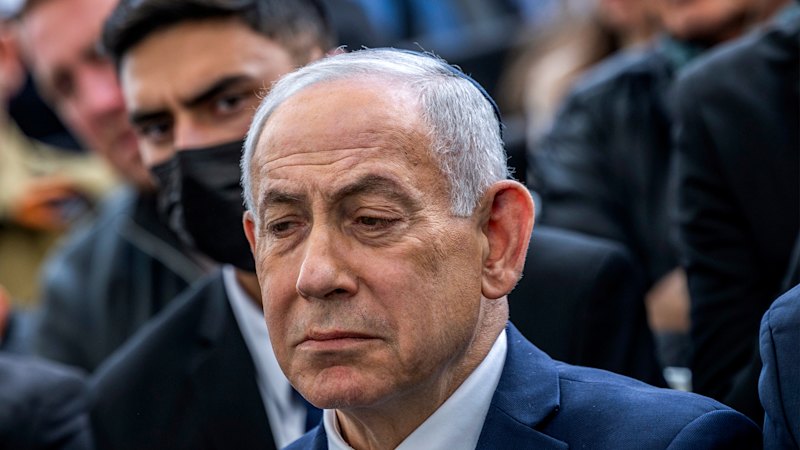
Another Israeli leader might bank the military gains and walk away – but Benjamin Netanyahu is under pressure to finish off the Islamic regime, regardless of the costs.
For Benjamin Netanyahu, a US-Iran peace deal that leaves the Islamic Republic in place and free to rebuild presents an existential threat.
This prospect more than anything else explains why Israel’s prime minister ordered the rapid escalation of Israeli attacks on Lebanon in recent days, analysts said.
The bombing is designed to undermine the finely balanced peace negotiations, something that appeared to bear fruit on Monday when Iran said it was “suspending talks” with the US.
“Given the continuation of the Zionist regime’s crimes in Lebanon, and considering that Lebanon was among the preconditions of the ceasefire, which has now been violated on all fronts – including Lebanon – the Iranian negotiating team is suspending talks and the exchange of texts through the mediator,” Iran’s Tasnim news agency reported.
But just as quickly as he threatened Beirut, he was brought to heel by Donald Trump, who, in a phone call, persuaded – or told – Netanyahu to call the latest strikes off.
Netanyahu has built his brand and career around opposing Tehran.
When Israeli jets launched the first strikes of the attack on Iran in the early hours of February 28, the great majority of Jewish Israelis cheered Netanyahu on.
It was assumed that the man they call “Mr Iran” was but days away from realising his lifetime pledge: the destruction of the Islamic Republic.
With the might of the US military and a willing US president behind them, what could possibly go wrong? That was 93 days ago.
Another Israeli leader might reasonably bank the considerable military gains made against Iran and wait for time to take its probable course.
Hamas, Iran’s proxy, has been all but destroyed in Gaza, and Hezbollah is nothing like the force it once was. In Iran itself, large swathes of the leadership have been taken out, and its economy and military-industrial complex have been set back years, if not decades.
Some analysts believe it is not improbable that the Islamic regime will collapse under rising domestic pressure and its own internal contradictions.
But that will not work for Netanyahu, who faces an election in October. In Israel, the failure of the war to topple the mullahs and deliver what Israelis call a “new reality” is generating widespread fear and angst.
“Israel’s leadership and citizenry, almost all the way across the spectrum, rightly regard the Islamic Republic as a direct, existential threat,” he added.
“[It’s] a regime that has to be removed for the sake of the Iranian people, the region, and the free world, but first and foremost, for the survivability of Israel.
📌 Kaynak
Bu özet Sydney Morning Herald kaynağından otomatik derlenmiştir. Tamamı için orijinal habere gidin.
Orijinal haberi oku →