BOOK REVIEWS: Four must-read books this month: Obsession, identity and South Africa’s political future
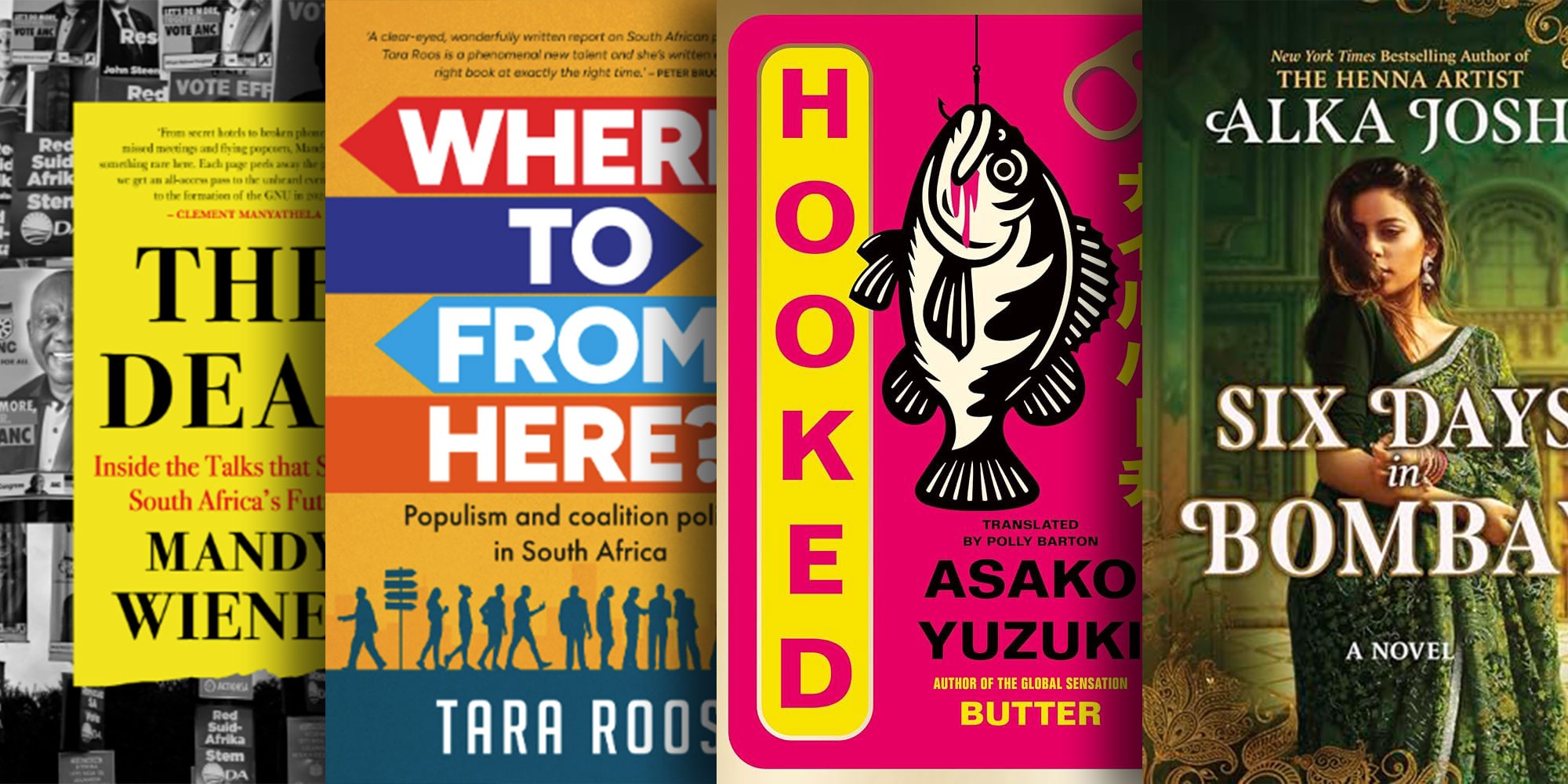
From unsettling female friendships and political negotiations to journeys of reinvention across continents, these four books explore power, belonging, intimacy and the stories people tell themselves in order to survive.
From unsettling female friendships and political negotiations to journeys of reinvention across continents, these four books explore power, belonging, intimacy and the stories people tell themselves in order to survive.
It is becoming increasingly difficult to choose my four book picks of the month. This is not a bad problem to have. In fact, it’s rather a wonderful one.
I’m getting so many good books at the moment that narrowing them down begins to feel a little like an episode of Survivor, except the contestants are novels and I become irrationally attached to all of them. Every month there are books I desperately want to keep on the island, but there are only so many reading hours in one life, and only so much space to write about the books we love. Here are the ones that made it onto the list.
There is a particular kind of female friendship that feels less like companionship and more like a hostage situation, and Hooked captures it with unnerving precision. This is a novel about two women who cannot quite figure out how to be close to other people, and what happens when one of them decides to solve that problem through surveillance.
Shoko is a housewife who has built a modest online following by refusing to do any housework and blogging about it. Her meals exist primarily to be photographed; in one unforgettable moment she plates a dish, snaps the picture and bins the lot.
Eriko, by contrast, is a senior executive in the seafood division of one of Japan’s largest trading companies. She has a coveted job, a good salary and very little in the way of a life outside the office. Then she finds the blog. And Shoko.
What begins as digital obsession quickly calcifies into the real thing. Eriko mines Shoko’s posts for clues: the neighbourhood, the restaurants, the small rhythms of her life, before engineering herself into Shoko’s orbit. For a short while it is lovely. This is the trick Yuzuki pulls off so effectively: the friendship is warm before it is wrong, and by the time Shoko senses something is off, the reader is already 10 steps ahead of her.
Then, when Shoko tries to extricate herself from the friendship, Eriko begins to unravel. The tension is taut and nasty in the best way.
Beneath the stalker thriller, Yuzuki is writing something sharper: a dissection of the people and structures that shaped these women. Shoko’s serially divorced father. Eriko’s mother, who ironed herself flat into the shape of the perfect wife. The power structures that still insist women perform domesticity as love.
The sharper insight, though, lies in how female friend
📌 Kaynak
Bu özet Daily Maverick (ZA) kaynağından otomatik derlenmiştir. Tamamı için orijinal habere gidin.
Orijinal haberi oku →