How a mysterious breast cancer drug found in horses could lead to ‘Russian roulette’ at the races
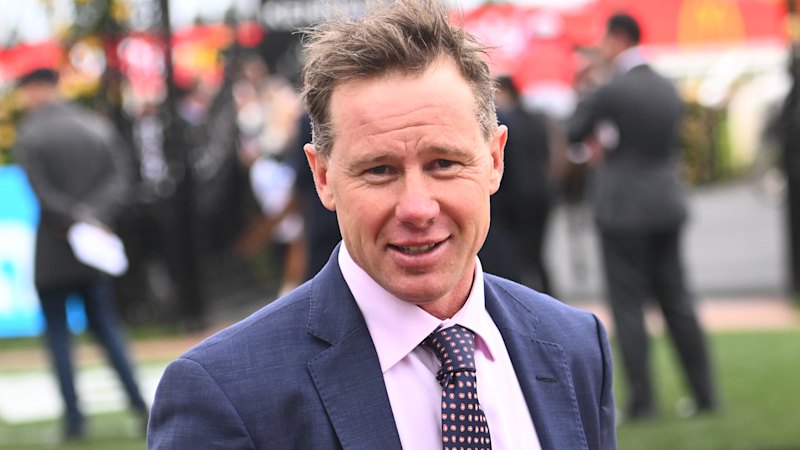
The racing industry has been accused of failing trainers in the breast cancer drug cases following the emergence of bombshell new research.
Renowned trainers Patrick Payne and Tom Dabernig are soon to front the Victorian Racing Tribunal on positive tests to a mysterious breast cancer drug, despite the emergence of research that shows their horses could have produced the substance naturally.
Payne is due before the tribunal on June 17 after his horse, Hard To Cross, returned a positive swab two years ago for formestane – a steroidal aromatase inhibitor used to treat breast cancer overseas, but not available in Australia.
Dabernig, the grandson of Australian Racing Hall of Fame Legend Colin Hayes, is listed to appear before the tribunal on July 8 after a urine sample from his horse Ashford Street showed traces of formestane, 4-hydroxytestosterone and testosterone.
The group 1-winning horsemen are two of at least 24 trainers in the thoroughbred and harness racing industries to have had horses test positive to formestane – a substance almost unheard of in Victorian racing circles before February 2023.
No incriminating evidence has ever been found at the trainers’ stables or elsewhere.
But this masthead first reported last week that breakthrough research emerged in March 24 that formestane could be endogenous in horses – that is, naturally occurring.
The research by UK scientist Marjaana Viljanto and others, commissioned by the British Horseracing Foundation, found formestane “for the first time” in 92 urine samples of 136 horses (50 geldings, 50 mares and 36 colts, selected at random).
Viljanto presented the research at the International Conference of Racing Analysts and Veterinarians 2026 at Melbourne’s Crown casino on March 24.
If the study is verified and published – a peer-review process that could take 12 months – the horses will have tested positive to a substance they potentially produced themselves.
But it will be too late for trainers of five stables who were fined $24,000 by the VRT on Mach 23 – a day before Viljanto’s Melbourne presentation – despite maintaining they had never done anything wrong.
Payne, who has always maintained his innocence, said he understood Racing Victoria had a job to do, and that they had been helpful throughout the process.
“I was more affected at the start because of the unknown – I was more accusing of those around me, ‘How has this happened?’ – but as it has gone on, I am more relaxed, knowing it probably occurs naturally,” Payne said.
But vice president of the Victorian branch of the Australian Trainers’ Association Daniel Bowman said the industry had “failed” the trainers.
Bowman said the UK research was “proof” in his mind that the positive
📌 Kaynak
Bu özet Sydney Morning Herald kaynağından otomatik derlenmiştir. Tamamı için orijinal habere gidin.
Orijinal haberi oku →