Africa: Coups and Crises Shake African Democracy
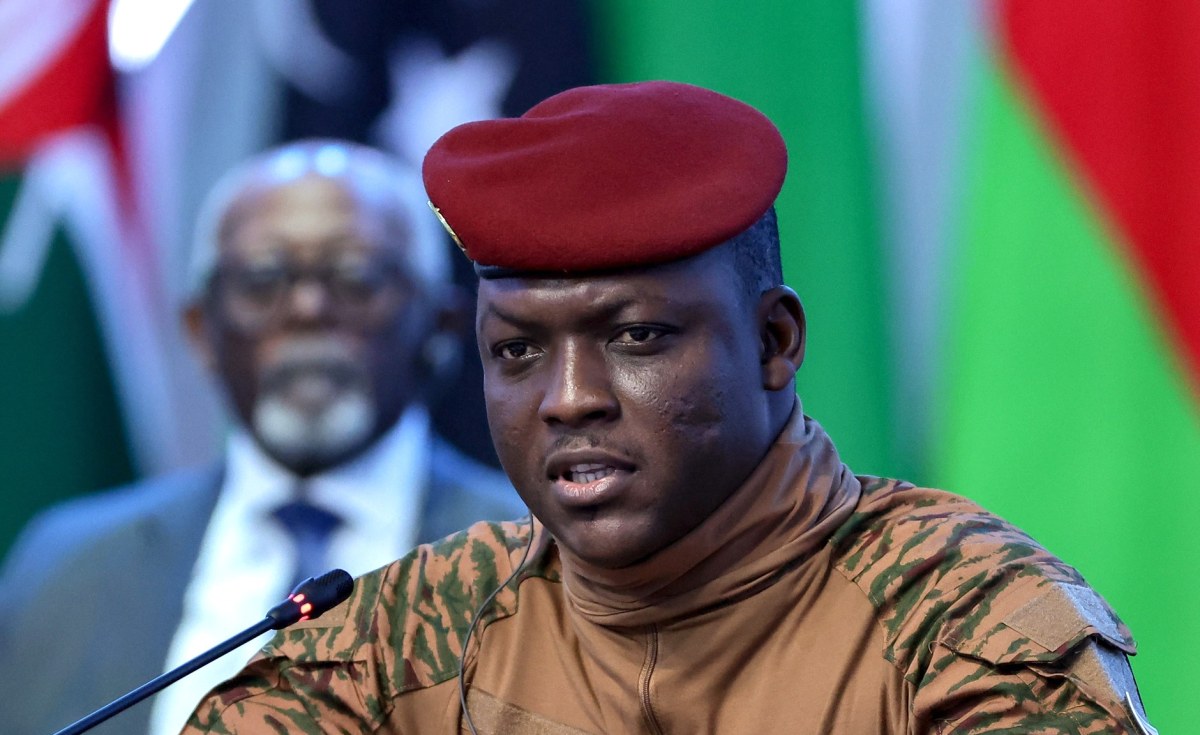
[DW] Junta leader Ibrahim Traore's call for Burkina Faso to "forget" democracy signaled a political shift across the continent.
Junta leader Ibrahim Traore's call for Burkina Faso to "forget" democracy signaled a political shift across the continent.
Ibrahim Traore, who seized power in the 2022 coup in Burkina Faso, recently told the Burkinabe people to "forget" about democracy.
"If an African wants to tell you about democracy, you should run away," he said on the state broadcaster, RTB, in April. "Democracy kills."
Traore's statement shocked many, yet it also resonated with parts of the population. In Burkina Faso's capital, Ouagadougou, some residents argued that there is no time for democracy, as the fights against terror groups and for economic rebuilding take priority.
Many of the 2026 elections across Africa are marked by fraud, repression and a growing disconnect between young people and political elites.
The question arises: Are African democracies more than electoral mechanisms without real accountability?
In several parts of Africa, a wave of military coups has taken hold, particularly in West Africa. In Mali, Burkina Faso, Niger, and Guinea, the military seized power between 2020 and 2023.
Now led by military juntas, the three francophone West African countries — Niger, Mali and Burkina Faso — formally withdrew from the regional bloc ECOWAS in January 2025 and established their own partnership, the Alliance of Sahel States (AES).
The trend extends beyond West Africa. Further south in Gabon, the military took power in 2023, while in the Central African nation of Chad, a transitional military council governed until 2025.
Mahamat Idriss Deby Itno now serves as Chad's president and successor to his father, Idriss Deby Itno, who was killed by rebels in 2021 after 30 years leading the country.
In Sudan, a violent struggle between rival factions escalated into a full-scale civil war.
Military takeovers are therefore no longer isolated incidents, but part of a regional dynamic.
A 2023 report from the United Nations Development Programme (UNDP) cites "multidimensional poverty, inequality, manipulation of constitutional term limits, limited youth and women's participation, governance deficits and higher levels of military expenditure" as factors that increase the risk of coups.
The study also notes "that when citizens have been disappointed with the delivery of democratically elected governments, they are more likely to support non-democratic styles of governance, including military rule."
"Democracy is not a standard form of government that can be implemented identically everywhere," said Veye Tatah, who was born and raised in Cameroon but has lived in Germany sin
📌 Kaynak
Bu özet AllAfrica kaynağından otomatik derlenmiştir. Tamamı için orijinal habere gidin.
Orijinal haberi oku →