Dementia is Australia’s leading cause of death. It’s even harder for people like Mithrani
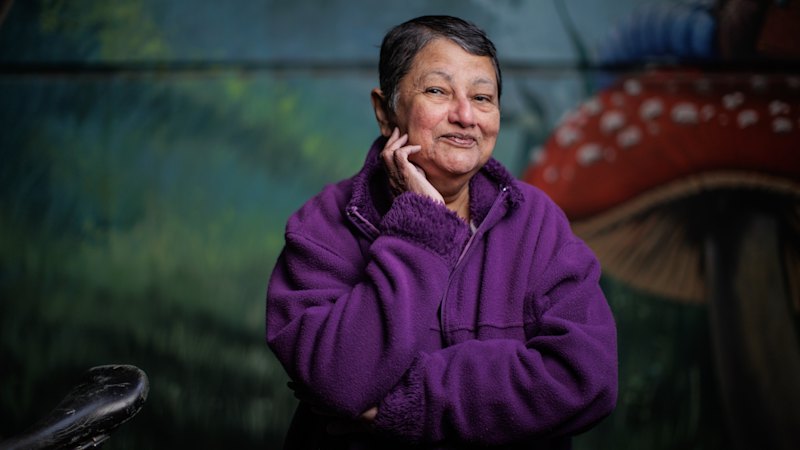
LGBTQ+ people with dementia and their carers can face unique challenges.
When Mithrani/Mithra De Abrew Mahadeva was a teenager growing up in Colombo, Sri Lanka, they had a crush.
“It all started with a school concert. She was attracted to me, and I was attracted to her,” they say.
But the excitement of a date to the movies was dashed by a visit from the girl’s family.
“One day, her mother and sister turned up and demanded my personal correspondence [with their daughter]. There was a big commotion in my family home and my foster father came out,” they say. “I really expected him to tell those people, ‘please leave’. But he was angry with me.”
For Mahadeva, who is non-binary and uses she/they pronouns as well as dual first names, they’ve known about their gender and sexual identity from a young age. But the pain of this encounter had a lasting effect.
They never spoke to this friend again (Mahadeva later learnt she was forced to marry), and has never had a relationship with a woman since.
Now in their 70s, Mahadeva lives with mixed dementia – Lewy body disease and Alzheimer’s. They also have PTSD, having grown up in an abusive household and a victim of domestic violence with their first husband, and are an ovarian cancer survivor.
As their dementia progresses, Mahadeva says recollections of traumatic incidences from childhood have become more common. Their short-term memory is also declining.
Being part of the Victorian Pride Centre in Melbourne and working as an advocate for the rights of LGBTQ+ people with dementia have been deeply healing experiences.
They cite their friendship with dementia advocate Anne Tudor as another source of great joy in life, and the opportunity to work with young people.
“There’s more strength because of the support the younger generations are giving,” Mahadeva says.
Today, Mahadeva is cared for by their youngest daughter at home, where they hope to age and eventually die. But they are concerned about whether carers, who already provide Mahadeva some support at home, will be tolerant of their identity.
“It’s very scary for me,” Mahadeva says, recalling one particularly upsetting experience in which a carer, after spotting a pride flag on a desk, became aggressive.
“She was angry, and I told her, ‘leave right now’. I was by myself. If I was not aware or able to speak up for myself, I don’t know what she could have done to me.”
Around 11 per cent of the Australian population identify as lesbian, gay, bisexual, transgender or intersex.
But it’s not known how many of the estimated 446,500 Australians living with dementia in 2026 are LGBTQ+. This is due to a paucity of data, as well as ind
📌 Kaynak
Bu özet Sydney Morning Herald kaynağından otomatik derlenmiştir. Tamamı için orijinal habere gidin.
Orijinal haberi oku →