Vote count begins as ruling party targets landslide win
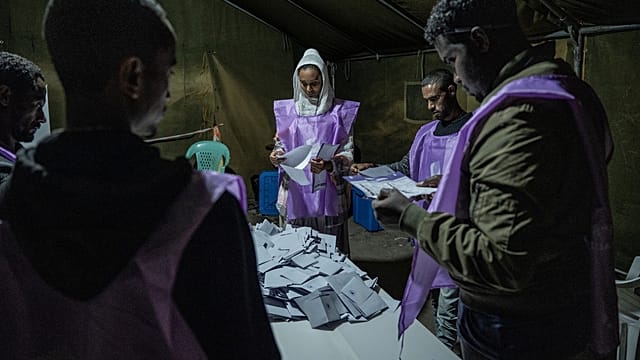
Vote counting is underway in Ethiopia after millions of citizens cast ballots in a parliamentary election widely expected to hand Prime Minister Abiy Ahmed and his ruling Prosperity Party another five-year term, despite security incidents, opposition concerns and ongoing conflicts.
Vote counting is underway in Ethiopia after millions of citizens cast ballots in a parliamentary election widely expected to hand Prime Minister Abiy Ahmed and his ruling Prosperity Party another five-year term, despite security incidents, opposition concerns and ongoing conflicts.
Polling stations closed late Monday night across Ethiopia, with vote counting beginning early Tuesday after millions of citizens took part in legislative elections.
Authorities extended voting by six hours, keeping polling stations open until midnight to accommodate high turnout in several areas.
More than 50 million people were registered to vote in the election, which will determine the composition of the House of Representatives and ultimately the country's next prime minister.
Results are expected within days, with the National Electoral Board indicating a final announcement could come by June 11.
According to electoral commission chairperson Melatework Hailu, voting was interrupted at some locations and 143 polling stations did not open because of security concerns.
No detailed information was provided about the incidents, although voting resumed at several affected stations.
A heavy military presence was visible in Addis Ababa throughout election day as authorities sought to ensure a peaceful process.
Prime Minister Abiy Ahmed's Prosperity Party is widely expected to retain its parliamentary majority and secure a new five-year mandate.
The ruling party won 96 percent of parliamentary seats in the 2021 election and is running unopposed in dozens of constituencies this year.
After casting his vote in Oromia, Abiy said the next five years would be a period of “historic transformation” for Ethiopia and called for greater determination and sacrifice to achieve national goals.
The 49-year-old leader has governed since 2018 and won the Nobel Peace Prize in 2019 for helping end decades of hostility between Ethiopia and Eritrea.
Despite visible voter turnout, opposition parties and analysts have raised concerns about the fairness and competitiveness of the election.
Many opposition figures remain in exile, in prison or politically marginalised, while armed groups continue to challenge federal authority in parts of the country.
Analysts at Chatham House described the vote as likely to be among the least competitive since Ethiopia introduced multiparty democracy in 1991.
Observers note that several opposition parties lack the resources and organisational strength needed to challenge the ruling party effectively.
The election is taking place against a backdrop of per
📌 Kaynak
Bu özet Africanews kaynağından otomatik derlenmiştir. Tamamı için orijinal habere gidin.
Orijinal haberi oku →