New light-powered chip could accelerate AI and quantum computing
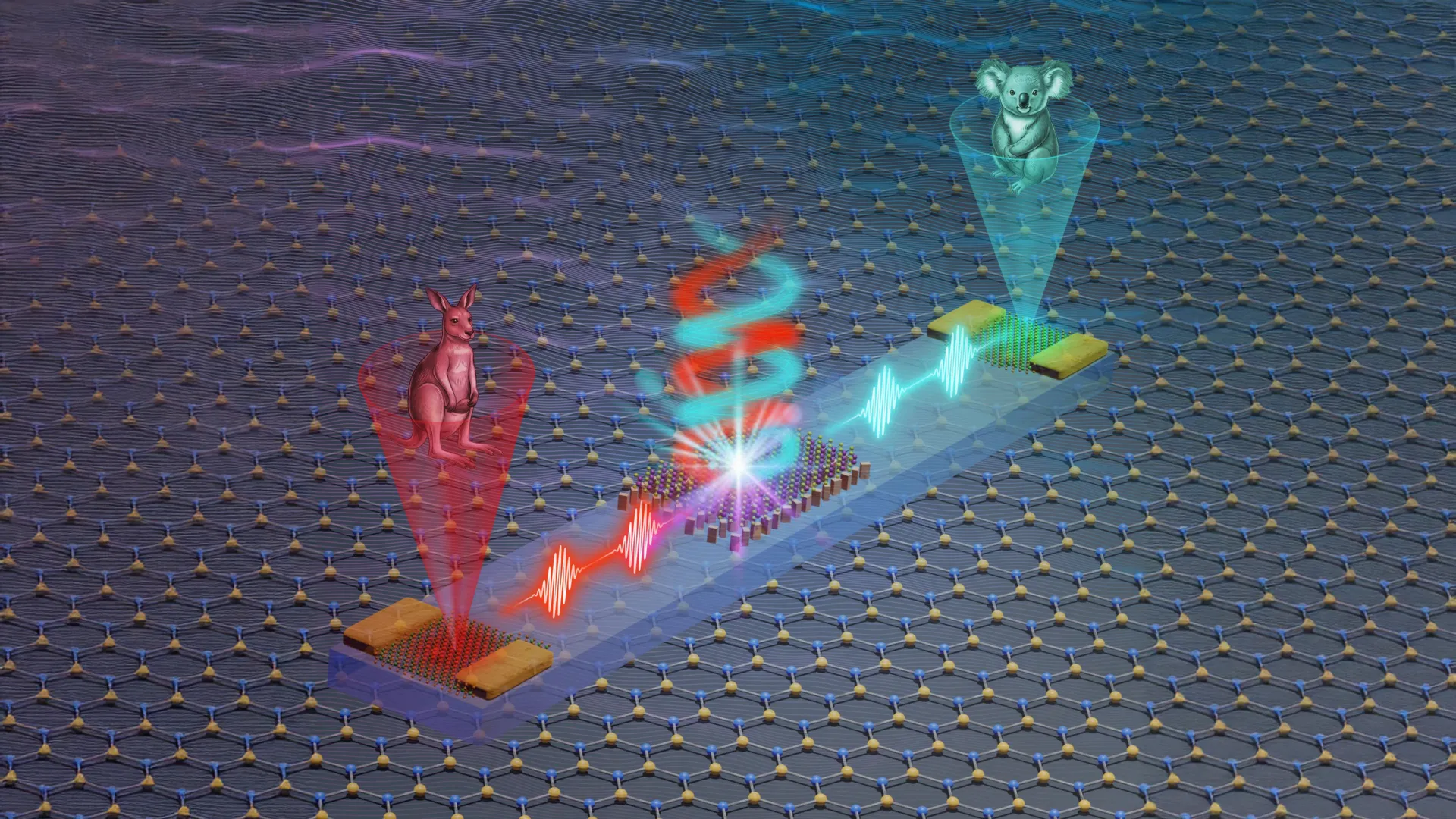
Scientists have created a tiny chip that can generate, steer, and read light-based information all in one device, marking a major leap toward ultra-fast, energy-efficient computing. The breakthrough uses atomically thin materials and nanoscale structures to control a unique quantum property of light called the âvalleyâ degree of freedom, allowing information to be encoded in new ways.
Scientists at Monash University have created a tiny new circuit that can generate, direct, and read information carried by light, all within a single chip.
The advance marks a significant milestone for a growing area of research known as "valleytronics," which could help drive future breakthroughs in faster computing, lower energy consumption, and quantum technologies.
Developed by researchers from the Monash School of Physics and Astronomy, the new device combines advanced nanotechnology with cutting-edge materials to solve a challenge that has limited the field for years.
For the first time, the team has built a fully integrated chip capable of producing specialized light signals, steering them along specific paths, and converting them into electrical signals within the same compact system.
These signals store information using a quantum property called the "valley degree of freedom." Scientists believe this unique characteristic could provide entirely new ways to encode, transmit, and process data.
Integrated Valleytronics Chip Solves Long-Standing Challenge
Lead author Dr. Chi Li, whose team's findings were published in Nature Photonics, said the achievement addresses a major obstacle in valleytronics research.
"Until now, we could generate or detect these signals, but not do everything in one integrated device," Dr. Li said.
"What we've built is a complete on-chip system that can create, route and read this information with very high precision."
The device relies on ultra-thin materials that are only a few atoms thick. These materials are paired with specially engineered nanostructures designed to precisely control light at extremely small scales.
Dr. Kaijian Xing, co-first author of the study and a Research Fellow at Monash University, explained that the team developed a practical way to combine these components.
"We employ a straightforward stacking approach to integrate ultra-thin materials with metasurfaces, overcoming the technical challenges of direct material growth on photonic structures, and enabling further advances in valleytronics," Dr. Xing said.
One of the technology's most important advantages is that it operates at room temperature. Many quantum systems require extremely cold environments, making them more difficult and expensive to use in real-world applications.
Senior author Dr. Haoran Ren, ARC Future Fellow and leader of the Monash NanoMeta Group, said the work could pave the way for a new generation of compact photonic devices that are both programmable and highly efficient.
According to Dr. Ren, the technology cou
📌 Kaynak
Bu özet ScienceDaily Tech kaynağından otomatik derlenmiştir. Tamamı için orijinal habere gidin.
Orijinal haberi oku →