Born on the road: Aid cuts leave refugee mothers with nowhere to turn
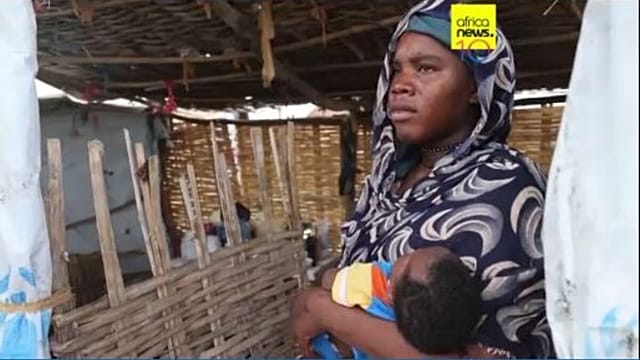
When labour pains struck Sudanese refugee Maude Ahmad Fadala, there was no clinic nearby, no transport and no money to reach a hospital. Hours later, weakened by illness and stranded on a dirt road in northern Central African Republic, she gave birth with only her sister by her side.
When labour pains struck Sudanese refugee Maude Ahmad Fadala, there was no clinic nearby, no transport and no money to reach a hospital. Hours later, weakened by illness and stranded on a dirt road in northern Central African Republic, she gave birth with only her sister by her side.
The agony began shortly after sunset at the Korsi refugee camp near the Sudanese border. Fadala, who had fled Sudan's war, was suffering from typhoid when labour started.
With no functioning maternal health services in the camp and no money for transportation, she began the journey to the district hospital on foot. But the distance proved too great.
Forced to stop repeatedly as contractions intensified, she eventually collapsed by the roadside and gave birth without medical assistance.
“I didn’t know about the baby. I don't know what a nurse does to make a newborn cry,” Fadala said. “My baby and I were sick.”
Her experience illustrates the growing dangers facing thousands of displaced women in one of the world's most fragile health systems.
For women fleeing Sudan's conflict, reaching safety does not mean escaping risk.
According to the United Nations, women in the Central African Republic are 40 times more likely to die during pregnancy or childbirth than women in the United States. The country records 829 maternal deaths for every 100,000 births, among the highest rates in the world.
Years of instability and conflict have weakened public services, particularly outside major cities. Poverty remains widespread, with one in three people living on less than two dollars a day.
Humanitarian organisations warn that recent funding reductions are worsening an already critical situation.
In Birao, a remote town near the Sudan border where many refugees have settled, four midwives supported by the United Nations Population Fund (UNFPA) lost their jobs last year after funding was cut.
The closures followed a decision by the United States government to end all funding agreements with the UN agency responsible for sexual and reproductive health programmes.
Several services that once supported pregnant women have since disappeared.
Opposite Fadala's tent stands a former UNFPA-funded safe space that previously arranged transportation for expectant mothers to the district hospital. It was one of four centres serving nearly 50,000 women in the area.
All have now shut their doors. Two health facilities supported through U.S. funding have also closed.
The loss of services is forcing women to carry pregnancies without medical supervision and deliver babies without professional s
📌 Kaynak
Bu özet Africanews kaynağından otomatik derlenmiştir. Tamamı için orijinal habere gidin.
Orijinal haberi oku →