Microsoft debuts Surface RTX Spark Dev Box to run large AI models without cloud costs
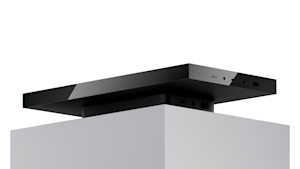
Microsoft on Monday unveiled the Surface RTX Spark Dev Box , a compact desktop computer designed to let software developers run large AI models on their desks instead of paying for cloud computing — a move that directly challenges the per-token pricing model that has defined the AI industry's economics since ChatGPT launched three and a half years ago. The device, announced at Microsoft Build 2026 , packs Nvidia’s new Blackwell-architecture RTX Spark processor and 128 gigabyt
Microsoft on Monday unveiled the Surface RTX Spark Dev Box , a compact desktop computer designed to let software developers run large AI models on their desks instead of paying for cloud computing — a move that directly challenges the per-token pricing model that has defined the AI industry's economics since ChatGPT launched three and a half years ago. The device, announced at Microsoft Build 2026 , packs Nvidia’s new Blackwell-architecture RTX Spark processor and 128 gigabytes of unified memory into a small-form-factor chassis, delivering what Nvidia rates at one petaflop of AI compute. In practical terms, that means a developer can load, run and interact with AI models exceeding 120 billion parameters without sending a single API call to the cloud. "These class of devices, we think, will get to about 100 billion parameter model running," Pavan Davuluri, Microsoft's executive vice president of Windows and Devices, said during a press briefing ahead of the event. He emphasized that raw model size is only part of the equation: "The model size is one thing, but for the model to be effective, it kind of needs to be able to have enough context, because a larger model, you feed it larger context." At 100,000 tokens of context, he noted, the key-value cache alone can consume 40 to 50 gigabytes of memory — which is precisely why Microsoft and Nvidia engineered the device around a 128-gigabyte unified memory pool shared dynamically between the CPU and GPU. The machine will be available later this year in the United States, sold exclusively through Microsoft.com. The company did not disclose pricing. Why Microsoft is betting that AI's future runs on fixed costs, not cloud meters The Surface RTX Spark Dev Box arrives at a moment when the economics of AI development have become a boardroom-level concern. Companies large and small are grappling with cloud GPU bills that scale unpredictably: every fine-tuning run, every inference call, every agentic workflow that loops through a frontier model accumulates cost. For a developer iterating rapidly on a prototype — running the same model dozens or hundreds of times a day — those charges compound fast. Microsoft is framing the Dev Box as a release valve for that pressure. Andrew Hill, corporate vice president of Surface, wrote in the announcement blog post that the device "changes that equation" by letting developers "reserve frontier model calls for truly frontier problems and handle the rest on their own hardware." The pitch is not that cloud computing is obsolete, but that much of the work currently being sent to remote data centers does not require state-of-the-art models and would be better served by capable local hardware with predictable, fixed costs. This is a significant strategic shift for Microsoft, a company that derives tens of billions of dollars in annual revenue from Azure cloud services . By selling hardware that explicitly reduces customers' cloud dependency, Microsoft is acknowledging a tension that has been building across the industry: the marginal cost of AI inference at scale is unsustainable for many teams, and the market is demanding alternatives. The bet appears to be that developers who prototype locally will still deploy to Azure when they need to scale — and that owning both ends of that workflow is more valuable than owning only the cloud. Inside the 128GB unified memory architecture that makes local AI possible The technical architecture of the Dev Box reflects a set of deliberate engineering choices aimed at sustained, not peak, performance — a distinction that matters enormously for AI workloads that can run for hours. At the center is Nvidia’s RTX Spark system-on-chip , which combines an ultra-efficient ARM-based CPU with a Blackwell-generation RTX GPU. In a traditional Windows PC, Davuluri explained during the briefing, this configuration would require four separate components: a CPU, a discrete GPU, dedicated graphics memory and system RAM. The RTX Spark collapses all of that into a single chip paired with a single unified memory pool. That unification is the critical design decision. Conventional gaming laptops with high-end Nvidia GPUs top out at roughly 24 gigabytes of GPU-accessible memory. The Dev Box's 128 gigabytes of unified memory — accessible to both the CPU and GPU through what Nvidia calls its Unified Memory Access architecture — is what makes it possible to load models that would otherwise require cloud GPU instances with specialty high-bandwidth memory configurations. Microsoft did substantial work at the operating system level to exploit this architecture. The company implemented new memory management logic in Windows that raises the ceiling on how much system memory the GPU can address, introduces smarter page-size allocation for shared memory regions and ensures that heavy GPU workloads do not starve the CPU of the resources
📌 Kaynak
Bu özet VentureBeat kaynağından otomatik derlenmiştir. Tamamı için orijinal habere gidin.
Orijinal haberi oku →