Astribot Hits Billion-Dollar Valuation After Rapid Series B Close
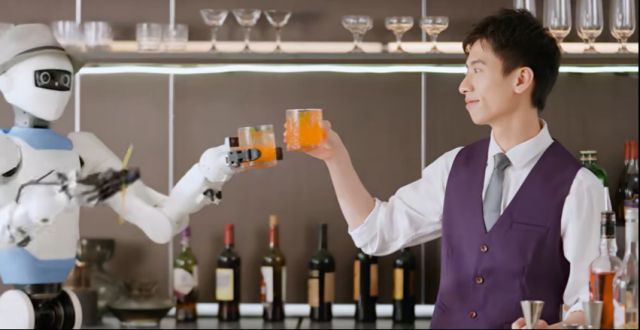
Shenzhen-based embodied AI startup Astribot has become the latest Chinese robotics company to achieve unicorn status, closing a Series B financing round that pushes its valuation past the 10 billion RMB (≈$1.4 billion) mark. The company completed three consecutive funding rounds in just three months, raising over 1 billion RMB in total. Founded in December 2022 by Lai Jie — a 17-year robotics veteran who was the first employee of Tencent's RoboticsX lab and later led Baidu's
Shenzhen-based embodied AI startup Astribot has become the latest Chinese robotics company to achieve unicorn status, closing a Series B financing round that pushes its valuation past the 10 billion RMB (≈$1.4 billion) mark. The company completed three consecutive funding rounds in just three months, raising over 1 billion RMB in total. Founded in December 2022 by Lai Jie — a 17-year robotics veteran who was the first employee of Tencent's RoboticsX lab and later led Baidu's Xiaodu Robot team — Astribot has moved with unusual speed from concept to commercial deployment. Lai previously developed the wheel-legged robot Ollie during his Tencent tenure. Astribot's technical architecture rests on three pillars: a proprietary AI foundation model called Lumo, an embodied operating system, and a cable-driven mechanical body. The company claims to be the world's first and only mass producer of cable-driven AI robots, a design choice that enables precise, human-like motion with high safety margins. The company's product lineup now includes two humanoid robots. The Astribot S1, an early-generation model, was followed by the new Astribot T1, unveiled on May 27. The T1 stands 1.55 meters tall, weighs 66 kilograms, and features 23 degrees of freedom with a 5-kilogram single-arm payload. Its cable-driven architecture sets it apart from gear- or hydraulic-based competitors, offering smoother and safer movement — a key requirement for robots intended to work alongside humans in homes and factories. By the end of 2025, Astribot had already begun thousand-level deliveries, signaling early manufacturing traction in a sector where many competitors remain in the prototype phase. The Series B round brought in a diverse set of investors. Returning backers including Ant Group were joined by new participants such as Thundersoft (a smart cockpit and operating system specialist) and Kede Education, along with several regional investment funds. The strategic partnership with Thundersoft targets intelligent cockpit integration for automotive applications, while collaborations with municipal authorities in Yangzhou focus on establishing an embodied AI center. The company is also investing in vocational education programs to train the next generation of robotics talent. Astribot's rapid ascent — from founding to unicorn status in under three years — underscores both the maturity of China's robotics supply chain and the surging investor appetite for embodied AI. With the T1 now in the market and production scaling, the company is positioning itself as a serious contender in the global humanoid robot race.
📌 Kaynak
Bu özet Pandaily kaynağından otomatik derlenmiştir. Tamamı için orijinal habere gidin.
Orijinal haberi oku →