Co-Packaged Optics: The Interconnect Backbone for AI Data Centers
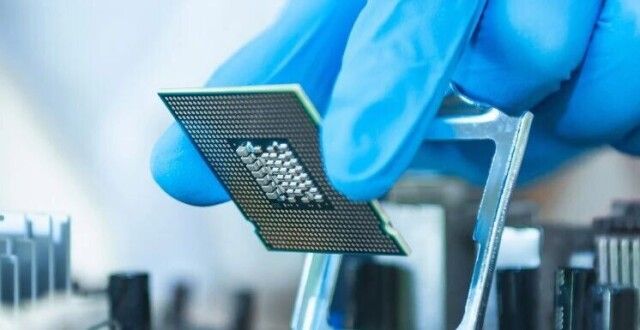
As AI agents and large language models drive explosive growth in data center traffic, the communication links between GPUs have become a critical bottleneck. In modern AI clusters, GPUs often spend more time waiting for data than actually computing — a problem that threatens to stall the entire AI scaling curve. Enter Co-Packaged Optics (CPO), an emerging interconnect technology that is rapidly positioning itself as the core solution for next-generation AI data centers. The O
As AI agents and large language models drive explosive growth in data center traffic, the communication links between GPUs have become a critical bottleneck. In modern AI clusters, GPUs often spend more time waiting for data than actually computing — a problem that threatens to stall the entire AI scaling curve. Enter Co-Packaged Optics (CPO), an emerging interconnect technology that is rapidly positioning itself as the core solution for next-generation AI data centers. The Optical-Electronic Integration Roadmap The industry's transition toward tighter integration of optics and electronics unfolds in three stages. Stage 1: Pluggable Optical Modules — Today's dominant approach. A 1.6T pluggable module consumes roughly 30 watts of power. While modular and replaceable, the energy cost at hyperscale becomes staggering, and the electrical interfaces between the module and the switch ASIC introduce signal integrity challenges at higher data rates. Stage 2: Near-Package Optics (NPO) — A transitional architecture that moves optical engines close to, but not directly on, the ASIC package. NPO cuts power consumption to approximately 9W per module and is expected to see explosive adoption in 2026–2027, serving as the bridge between pluggables and full CPO. Stage 3: Co-Packaged Optics (CPO) — The endgame. Here, the optical engine and the switch ASIC are fabricated directly on the same substrate, reducing the interconnect distance to millimeters. Power consumption drops below 2W — a 15x improvement over pluggable modules. The result is dramatically lower latency, higher bandwidth density, and significantly better energy efficiency. Enabling Technologies CPO's feasibility hinges on several material and packaging advances. Glass substrates have emerged as the ideal platform — they offer superior flatness, a low dielectric constant for signal integrity, and crucially, optical transparency that simplifies light coupling. Companies like TuringQ have demonstrated glass-based heterogeneous integrated CPO solutions, such as their GCS-HiCPO platform. Meanwhile, Micro-LED technology is being explored as a potential on-chip light source for CPO. Early results suggest Micro-LEDs could consume as little as 5% of the power required by conventional laser transmitters, making them an extremely attractive candidate for future CPO modules. The Road Ahead NPO is poised for its breakout phase in 2026–2027, followed by a gradual, multi-year migration to full CPO as manufacturing maturity improves. With Chinese players like TuringQ, Hubei Jiangcheng Laboratory, and OIP Technology driving R&D alongside global semiconductor leaders, CPO is set to become the indispensable backbone of AI data center interconnects — solving the bandwidth bottleneck one millimeter at a time.
📌 Kaynak
Bu özet Pandaily kaynağından otomatik derlenmiştir. Tamamı için orijinal habere gidin.
Orijinal haberi oku →