Haiti celebrates as Woodensky receives visa to join World Cup campaign
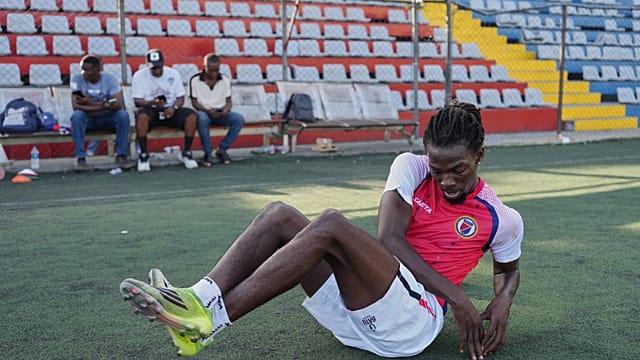
After weeks of uncertainty, Haitian footballer Woodensky Pierre has received a U.S. visa to join his national team at the World Cup. For supporters in Haiti, the moment is more than a sporting milestone—it is a symbol of hope for a country facing violence, instability and hardship.
After weeks of uncertainty, Haitian footballer Woodensky Pierre has received a U.S. visa to join his national team at the World Cup. For supporters in Haiti, the moment is more than a sporting milestone—it is a symbol of hope for a country facing violence, instability and hardship.
The final obstacle standing between Woodensky Pierre and the World Cup has been removed.
The United States has granted a visa to the midfielder, allowing him to travel from Haiti and join his teammates in Florida ahead of the tournament.
Pierre was the only member of Haiti’s national squad still based in the Caribbean nation and had been unable to travel with the rest of the team while awaiting approval.
His departure from Port-au-Prince on Tuesday sparked scenes of celebration at the airport, where supporters, workers and family members gathered to wish him well.
For many fans, his journey represents a victory that extends far beyond football.
Among those celebrating was supporter Jean Baptism, who described Pierre as a symbol of determination and perseverance.
Fans said they had worried that visa complications would prevent the young player from participating in the biggest competition of his career. Instead, they watched him board a plane bound for the United States with what one supporter described as a “happy heart.”
Others saw the moment as historic. Some posed for photographs with Pierre, while family members embraced him before his departure.
The excitement reflects the importance of Haiti’s return to the world stage after decades away from football’s most prestigious tournament.
Pierre’s story resonates deeply with Haitians because of where he comes from.
The midfielder was raised in Cité Soleil, a seaside district of Port-au-Prince that has long struggled with poverty, gang violence and insecurity. The area is located in western parts of the capital, where armed groups control significant territory and daily life is often shaped by instability.
Despite those challenges, Pierre emerged through Haiti’s domestic football system and earned a place in the national team.
His journey from one of the country’s most troubled neighbourhoods to the World Cup has become a source of inspiration for many young Haitians.
Haiti has qualified for the World Cup for only the second time in its history. The nation’s previous appearance came more than 50 years ago, making this year's tournament a landmark moment for Haitian football.
The team has already begun preparations in the United States and is scheduled to play warm-up matches against New Zealand and Peru before the
📌 Kaynak
Bu özet Africanews kaynağından otomatik derlenmiştir. Tamamı için orijinal habere gidin.
Orijinal haberi oku →