Nicole and Patrick bought their own home. Then they found something better
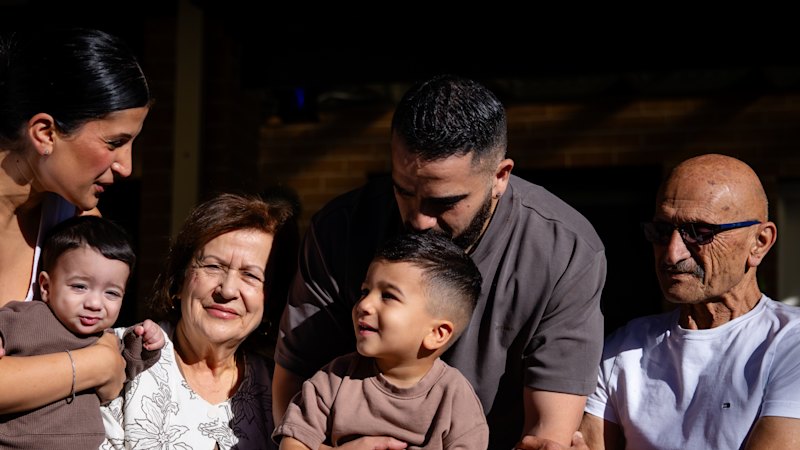
They bought a property and lodged plans to build, but the hurdle of COVID led them to come up with a new and better arrangement.
As an adult, the thought of your own family living with your parents or in-laws might trigger visions of boundaryless chaos and familial tension, Everybody Loves Raymond-style.
But for 37-year-old Sydney woman Nicole Zeait, her husband Patrick, and their two children, that living arrangement works perfectly.
Nicole was already living with her parents, Mick and Therese, when her husband moved into their Yagoona home in 2019. The couple’s two children, Roman and Jude, joined the multigenerational household in 2023 and 2025, respectively.
Originally, the decision to live with Nicole’s parents was practical and temporary.
“We purchased our own property in 2019 with plans to [knock down the existing property and build a new home]. Moving in with my parents was a conscious decision to help us save and set ourselves up properly,” Nicole said.
Unfortunately, they faced a hurdle. “We lodged plans to build in 2020, but when COVID hit, those plans were put on hold,” Nicole said. “Since then, we’ve had great tenants, so there hasn’t been any urgency to move them on.”
Amid the housing affordability challenge, multigenerational or intergenerational living – when people from two or more generations of a family live together in the same household or on the same property – is increasingly common across Australia, ABS data show.
“Between 2016 and 2021, the ABS census found that people aged 25 to 34, living with their parents, increased by 16 per cent,” said head of development from the Australian Housing and Urban Research Institute (AHURI), Tom Alves.
While there is limited data on multigenerational living, Alves said anecdotally he has noticed “a swing in that direction”, with difficulty accessing housing and its affordability among the catalysts.
“The declining affordability of housing is definitely a major driver, and as people try to save for home ownership, being able to share the load can help,” he said.
Director of planning and infrastructure economics at KPMG, Terry Rawnsley, said that “sharing the load” can not only help save for a house deposit, but can also be financially beneficial in other ways.
“You might just have two people’s names on the mortgage, the grandparent chipping in with expenses, a cousin chipping in with the bills, so it’s diversifying the income streams for those homes as well,” he said.
But as many migrants and First Nations families who have lived in multigenerational households for centuries will attest, this arrangement offers a range of other benefits.
“You’ve got your family and loved ones around you; there might be some ch
📌 Kaynak
Bu özet Sydney Morning Herald kaynağından otomatik derlenmiştir. Tamamı için orijinal habere gidin.
Orijinal haberi oku →