Rare earths and antimony hits fuel Locksley US growth story
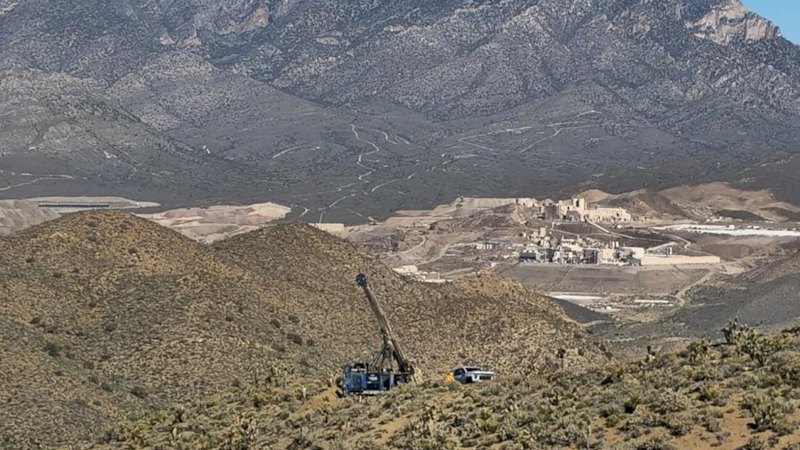
Locksley Resources has hit high-grade rare earths at El Campo and extended rich antimony mineralisation at its Mojave critical minerals project in California, USA.
Locksley Resources has confirmed high-grade neodymium and praseodymium-enriched rare earths mineralisation at its El Campo prospect in America.
The company also successfully extended the rich antimony trends at the nearby Desert Antimony Mine (DAM), which lies within its broader Mojave project in California.
The recent maiden diamond drilling program at El Campo successfully verified that this light rare earth system appears to mirror the style of the prominent Mountain Pass carbonatite system. These types of geological structures host much of the world’s rare earths.
The premier drilling intersection from the program jagged a broad 7.20 metres grading 2.93 per cent total rare earth oxides (TREO) from 35.40m.
This hit featured a higher-grade 3.75-metre slice grading 4.45 per cent TREO from 37m, with a peak internal of 0.70m grading 6.03 per cent TREO from 40.05m.
A second hole also hit the system, returning 0.90m at 1.09 per TREO from 107.30m. According to management, the drilling has confirmed rare earths mineralisation extends well below surface and remains open along strike and at depth within the corridor.
Notably, the assays also show neodymium and praseodymium make up roughly 25 per cent of the TREO in the key drill intercepts. That matters because neodymium and praseodymium magnet rare earth oxides are highly critical for permanent magnets, defence technologies, robotics and advanced manufacturing.
Locksley says the results support the interpretation of a potentially larger primary carbonatite system sitting at depth across the permits.
El Campo strategically sits just 5.5 kilometres southeast of MP Materials’ massive Mountain Pass mine - the only operating and producing rare earths mine in the United States.
Additionally, the company received the last assays from the final two holes of an eight-hole maiden diamond drilling program at DAM, successfully confirming the continuity of high-grade stibnite – the host rock for antimony - along strike to the south and below historical underground workings.
One hole successfully pierced subvertical quartz-stibnite veins within the granite gneiss to return a top hit of 0.30m, showcasing an impressive 6.44 per cent antimony from 65.3m, including a section of 0.30m grading 2.90 per cent antimony from 50.70m.
Locksley Resources non- executive technical director Ian Stockton said:“Diamond drilling at the El Campo prospect represents the first test of the depth extensions of known REE mineralisation exposed at surface. Diamond drilling at DAM represents the first test of antimony mineralisation beneat
📌 Kaynak
Bu özet Sydney Morning Herald kaynağından otomatik derlenmiştir. Tamamı için orijinal habere gidin.
Orijinal haberi oku →