NASA's Webb detects methane and strange chemistry on interstellar comet 3I/ATLAS
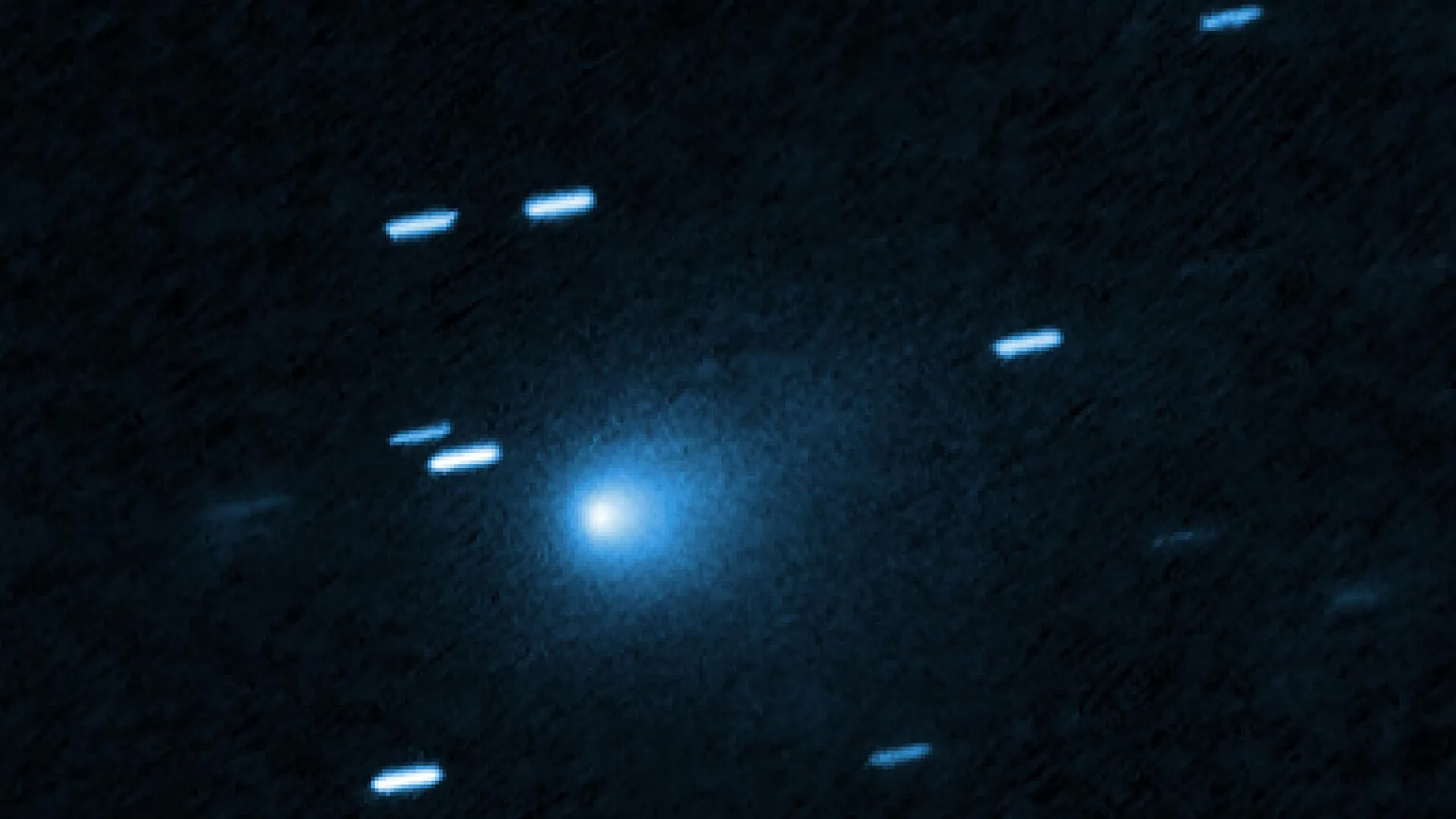
NASA's James Webb Space Telescope has uncovered unusual chemistry in interstellar comet 3I/ATLAS, including the first direct detection of methane on a visitor from another star system. The comet also contains exceptionally high levels of carbon dioxide, making it unlike most comets born in our solar system. Scientists believe the methane was hidden beneath the surface and only emerged after solar heating reached deeper icy layers.
NASA's James Webb Space Telescope has captured the first mid-infrared chemical fingerprint of an interstellar object, providing new insights into the composition of comet 3I/ATLAS as it traveled away from the Sun. The findings were recently published in The Astrophysical Journal Letters.
Researchers used Webb's MIRI (Mid-Infrared Instrument) during two observing sessions after the comet passed its closest point to the Sun. The first set of observations took place on December 15 and 16, when 3I/ATLAS was about 205 million miles (329 million kilometers) from the Sun. A second round followed on December 27, with the comet about 236 million miles (379 million kilometers) away.
For the first time, scientists directly identified methane gas on an interstellar visitor.
Methane is an extremely volatile substance that can quickly change from solid ice to gas. Its appearance only after the comet had already passed close to the Sun suggests the methane was buried beneath the surface. According to the research team, the comet's upper layers likely shielded the methane ice until solar heating penetrated deeper into the icy interior.
The amount of methane compared to water also surprised researchers. The ratio is much higher than what is typically seen in comets from our own solar system, with only a handful of known examples showing similar characteristics.
The observations also confirmed another unusual feature of 3I/ATLAS. The comet releases exceptionally large amounts of carbon dioxide relative to water, far exceeding the levels commonly measured in solar system comets.
Together, the methane and carbon dioxide measurements point to a formation history that differs significantly from that of most comets that originated around our Sun. The results suggest that 3I/ATLAS formed in a very different chemical environment before beginning its journey through interstellar space.
Webb also tracked how the comet's activity changed as it moved farther from the Sun.
Scientists observed a sharp decline in the production of gases, with water showing the steepest decrease. This behavior is expected as the comet receives less solar energy. As temperatures fall, less ice vaporizes from the surface and near-surface layers.
Water is less volatile than methane or carbon dioxide, which means its gas production shuts down more quickly as the comet cools.
The observations were carried out using MIRI's Medium Resolution Spectrometer, an instrument that separates infrared light into its individual wavelengths. By analyzing those wavelengths, researchers can determine which gases
📌 Kaynak
Bu özet ScienceDaily Tech kaynağından otomatik derlenmiştir. Tamamı için orijinal habere gidin.
Orijinal haberi oku →