Young footballers in a Rio favela find hope from their sport ahead of World Cup
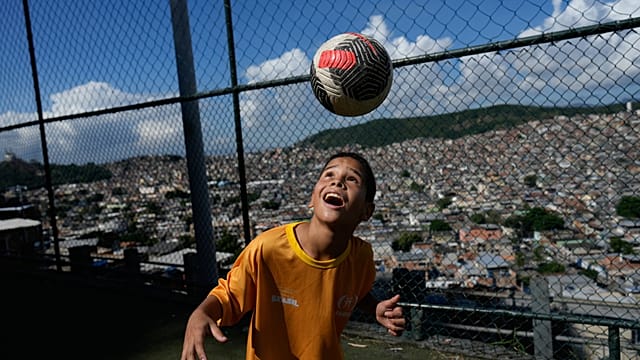
The 2026 FIFA World Cup is just a week away. But for a young football team in one of Rio de Janeiro’s poorest favelas, their moment on the international stage has already happened. Last month, they represented Brazil in the Street Child World Cup in Mexico and brought home the trophy.
The 2026 FIFA World Cup is just a week away. But for a young football team in one of Rio de Janeiro’s poorest favelas, their moment on the international stage has already happened. Last month, they represented Brazil in the Street Child World Cup in Mexico and brought home the trophy.
When Brazilian João Victor Gonçalves began playing soccer in one of Rio de Janeiro’s poorest and most violent favelas, little did he know the game would one day allow him to travel abroad and play in an international competition.
Last month, along with nine other young boys, he flew to Mexico to represent Brazil in the Street Child World Cup, a tournament with teams from 30 countries composed of boys from impoverished backgrounds, organised ahead of this year’s FIFA World Cup.
“I never could have imagined that one day this would happen, that I would represent my country, doing what I most love — playing soccer — in another country,” said Gonçalves, who is 18. The Brazil team went undefeated and won the tournament, enhancing the thrill of the experience.
Like many Brazilians, Gonçalves and his teammates grew up kicking a ball around and closely following members of the Seleção, Brazil’s national soccer team. They dream of one day becoming professional soccer players like their heroes.
Beyond being the gateway to climatic moments, the Street Child United Brazil project in the Penha complex of favelas allows participants to at least momentarily escape from everyday life marked by deprivation and violence, fostering a sense of safety, belonging and hope.
The initiative began in 2014, when Brazil hosted the FIFA World Cup. Today, some 100 youths take part in the year-round training sessions that take place four days a week. The project welcomes girls and boys aged 6 and above.
Playing soccer represents “love, passion, the realisation of dreams,” said Ryan Mercedes, a 17-year-old who also went to Mexico. “When we enter the field, it’s time for us to have fun and be happy.”
But soccer enthusiast Rafael Gomes says that the reality of life in the favela has sometimes caught up with them. The soccer fans have had to at least once interrupt a game due to a police operation in the favela.
“We were training when all of a sudden there were shots, we had to run and stay in the corners,” said Gomes.
Last year, more than 120 people died in a deadly police operation in Penha and the neighboring Alemao complex of favelas targeting members of the criminal group Red Command.
The drug-trafficking group — which the Trump administration recently decided to classify as a foreign terroris
📌 Kaynak
Bu özet Africanews kaynağından otomatik derlenmiştir. Tamamı için orijinal habere gidin.
Orijinal haberi oku →