ROVING REPORTERS: After dodging extinction, will the black wildebeest now fade away to blue?
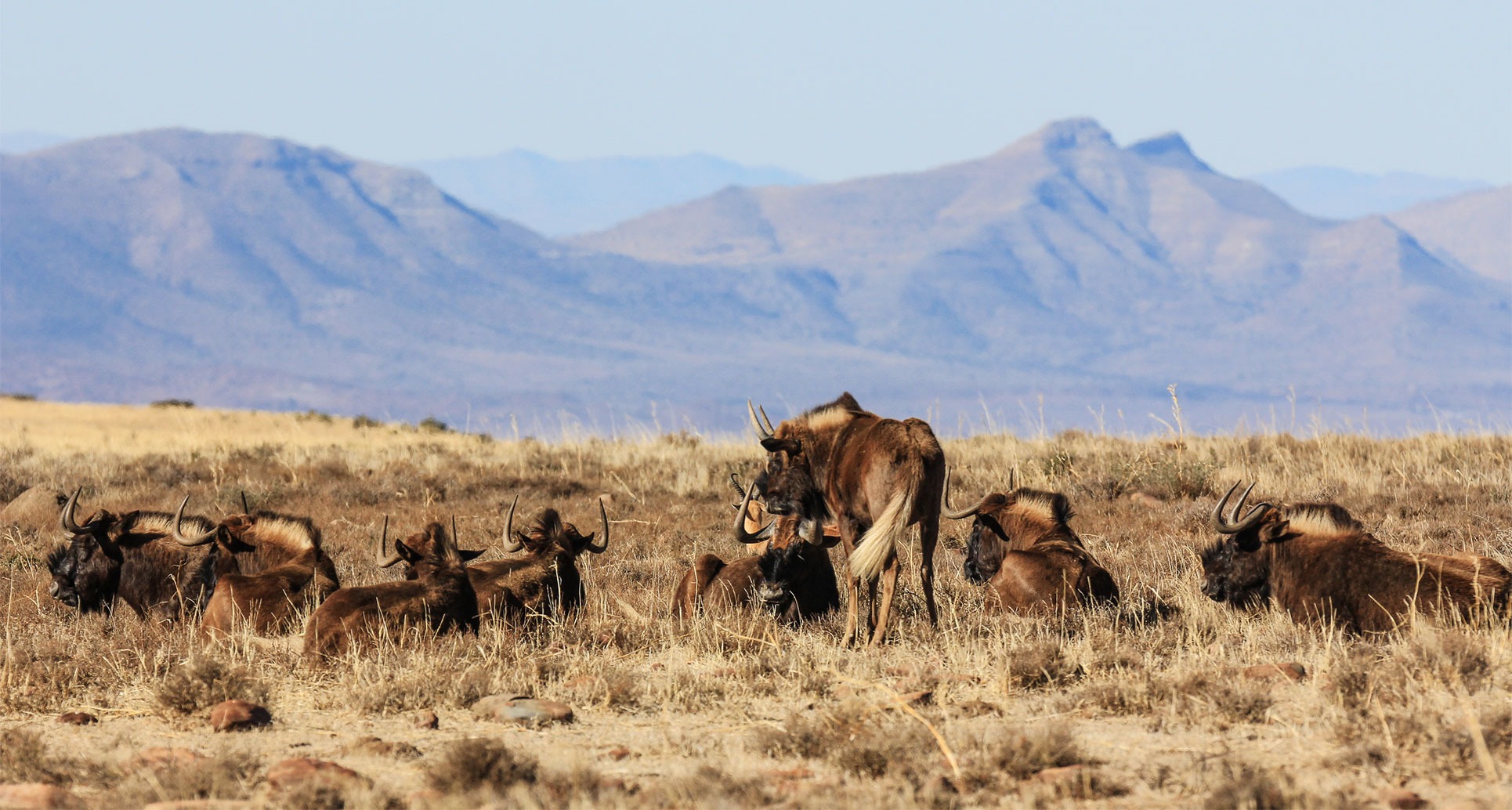
Having narrowly escaped extinction in the 19th century, the black wildebeest now faces a different threat: being genetically absorbed by the far more numerous blue wildebeest. Researchers are using cutting-edge genomic tools to determine whether hybridisation is quietly eroding the genetic identity of one of South Africa’s endemic species.
Having narrowly escaped extinction in the 19th century, the black wildebeest now faces a different threat: being genetically absorbed by the far more numerous blue wildebeest. Researchers are using cutting-edge genomic tools to determine whether hybridisation is quietly eroding the genetic identity of one of South Africa’s endemic species.
Conservation geneticists are concerned that while it managed to survive hunters and disease in the 19th century, the black wildebeest will be hybridised out of existence by its burlier cousin, the blue wildebeest.
The estimated 300 animals still in existence by the beginning of the 20th century became the foundation for the species’ eventual recovery. Thanks to conservation efforts, the black wildebeest population has rebounded to about 16,000 animals today, but that recovery came with a genetic cost. The species experienced a severe genetic bottleneck, and as a result may now have significantly less genetic diversity than its blue counterpart. The blue wildebeest, by contrast, numbers about 1.5 million animals, and is familiar from the mass migrations that take place across the Serengeti in Tanzania.
In South Africa, as game farmers and reserves buy and transport animals and mix and match their herds, a lack of vigilance or awareness of the hazard of hybridisation may have the unintended consequence of eclipsing the one, and because the blue wildebeest is the beefier of the two, it is the more likely to outmuscle the black wildebeest.
As part of a project initiated by Oppenheimer Generations Research and Conservation, a research team from the University of Pretoria, including Dr Anri van Wyk and Arrie Klopper, are probing the genetics of 50 individuals of each species from the same property to determine the extent of hybridisation between these two iconic African antelope species, and what that means for their conservation.
There are two critical thrusts to the research. First, because the black wildebeest is endemic to SA, its loss will impoverish species diversity in the country. Second, and something that is not generally appreciated, “Hybrid individuals don’t have a conservation status, so they’re not protected in any way,” says Van Wyk.
A previous behavioural study, conducted at the same location which has about 500 black and 850 blue wildebeest, has shown that the two remain largely ecologically separated on the reserve. The advantage of doing this genetic research at this property is that its herds have been there for approximately eight generations. This will allow them to determine the extent of hybridi
📌 Kaynak
Bu özet Daily Maverick (ZA) kaynağından otomatik derlenmiştir. Tamamı için orijinal habere gidin.
Orijinal haberi oku →