Kerbside parking is great for drivers – but terrible for everyone else. Could we get rid of it?
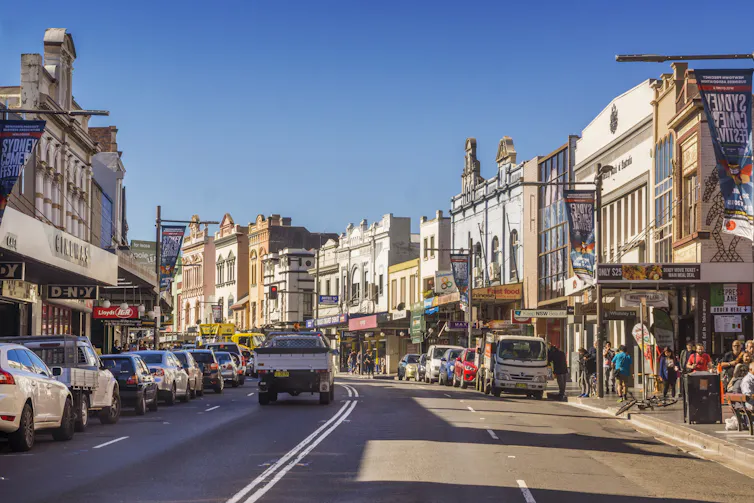
It may seem like it’s impossible to find a car park on the street. As a recent Grattan Institute report makes clear , Australia actually has an oversupply of parking, both on streets and in parking lots. Across five of the state capitals, most postcodes have more on-street spaces than there are registered cars. That’s great for drivers, given most on-street parking outside the inner city is free and has no time limit. Many spaces are used by locals with a driveway or garage w
It may seem like it’s impossible to find a car park on the street. As a recent Grattan Institute report makes clear , Australia actually has an oversupply of parking, both on streets and in parking lots. Across five of the state capitals, most postcodes have more on-street spaces than there are registered cars. That’s great for drivers, given most on-street parking outside the inner city is free and has no time limit. Many spaces are used by locals with a driveway or garage who find it more convenient to park on the street. The problem is, abundant street parking comes at a cost. Streets jammed with parked cars look bad – and remove space for bikes, e-bikes and scooters. Is it too late to change course? No. The rise and rise of kerbside parking If you look back at the street designs by 19th-century planning pioneers , you immediately notice something very different from today’s city streets. Back then, there was no kerbside parking. Streets were largely shared spaces, where walkers, horse coaches, trams and early bicycles mingled. Of course, this was when motor vehicles were just emerging. As car ownership surged in the 1920s and ‘30s, city centres began to struggle with parking shortages, double parking and endless cruising for spaces. The problem was summed up by Nebraska journalist Henry Allen Brainerd in a letter to his city newspaper : What a pity that the builders of large business blocks could not have looked ahead at the time of building and seen the need for parking space in the larger cities of the world. Since then, many cities around the world have heeded that advice, requiring parking spaces to be provided everywhere – along city streets, in suburbs, under apartment blocks and in parking lots. What’s wrong with kerbside parking? Many people see kerbside parking as a simple fact of life. But it was a choice, and it comes with real costs. For one, parked cars look bad. A pretty street loses appeal if there are endless lines of parked cars. There’s a reason real estate ads don’t include cars. People find it stressful or boring to be in monotonous streetscapes characterised by heavy traffic and parking. Road space is limited. Drivers are using a public road to park their private cars. Worse still, kerbside parking makes it much harder for other types of transport to share the road. In recent years, there’s been huge growth in micromobility – think bikes, e-bikes and scooters. But the road space available hasn’t changed much. Too often, riders are forced onto skinny bike lanes that end abruptly, or have to try and ride in the narrow space between parked cars and moving vehicles. As micromobility booms, the pressure on scarce road space will only intensify as riders demand wider segregated paths. The only way this could happen in densely populated areas is if there was less kerbside parking. Kerbside parking is convenient – but comes at a cost to other forms of transport. Kokkai Ng/Getty Could we really reduce kerbside parking? What would happen if authorities banned on-street parking? Given the oversupply of parking , most drivers would be able to park off-street, such as at shopping centres, offices and parking lots. These would need better sharing arrangements. With road space freed up, it would be possible to make many streets much more pleasant – and include safe two-way paths for riders. In areas where these lanes aren’t needed, the freed-up space could be used for trees and plants to help cool cities and soak up rain. Other options include EV charging stations and expanding outdoor dining, as many areas did during the COVID years . In practice, a ban on kerbside parking couldn’t be universal. Some spaces would have to be reserved for people with disabilities, emergency services, deliveries, ride-hailing and car-sharing. With kerbside parking removed, there’s space for more trees and lanes for micromobility. Dorina Pojani But would it be political suicide? There’s almost always a backlash when authorities try to wind back kerbside parking. Resistance usually comes from drivers, residents and business owners, who worry that less on-street parking will lead to more traffic, less business and even a drop in property prices. The opposite is true. When high streets are made more friendly to bikes and other forms of micromobility, businesses generally make more money , not less, and property values can go up. People who prefer driving or have no alternative also benefit from less traffic, making it more likely they can visit the business. Overseas examples show it can be done In many European nations, authorities have worked to make streets less centred on cars and parking. Established models of reducing car parking include Woonerven (living streets) and Fietsstraten (cycling streets) in the Netherlands, as well as car-free or car-lite neighbourhoods such as Vauban in Germany and Hammarby Sjöstad in Sw
📌 Kaynak
Bu özet The Conversation AU kaynağından otomatik derlenmiştir. Tamamı için orijinal habere gidin.
Orijinal haberi oku →