Iran live updates: Trump details risky, rejected plan to collect 'nuclear dust'
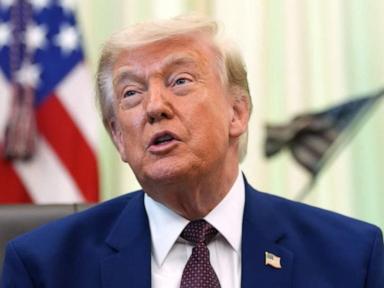
President Donald Trump announced "major combat operations" against Iran on Feb. 28, with massive joint U.S.-Israeli strikes.
Trump said he decided not to go forward with the plan given the dangers.
President Donald Trump announced "major combat operations" against Iran on Feb. 28, with massive joint U.S.-Israeli strikes targeting military, government and infrastructure sites.
Following the announcement of a two-week ceasefire, initial U.S.-Iran talks in Pakistan in April failed to reach a peace deal.
Trump later announced the open-ended extension of the ceasefire and the continuation of a U.S. blockade until negotiations are concluded "one way or the other."
Speaking to reporters from the Oval Office on Thursday, President Donald Trump, for the first time, detailed a risky plan that he opted not to greenlight that would have sent U.S. troops into Iran to collect enriched uranium, or "nuclear dust" as he calls it.
The president said he decided not to go forward with the plan given the dangers.
Trump said the operation would have taken at least two weeks and also talked about the "massive equipment" that would need to be airlifted in.
The president added that the U.S. could still carry out such an operation, but also said that there's "no reason to" because the nuclear material is "entombed."
"We could get it right now," Trump said. "I don't think they could stop us if we wanted, but there's no reason to. It's entombed."
When asked what his red line for restarting military action with the war with Iran and whether that line for him is the killing of American troops, President Donald Trump said that such an action would be a "very good reason" to restart the war.
Trump also said he would be open to meeting Iranian Supreme Leader Ayatollah Mojtaba Khamenei, claiming that some have suggested such a meeting.
"I don't want to meet. But if I did meet, I'd be honored to meet him," Trump said. "I'd like to see if we make a deal. But if we make a deal, it's possible that I would meet him. I'd be OK with that."
Israel's Foreign Ministry responded to Hezbollah's rebuke of the ceasefire between Israel and Lebanon, saying that Hezbollah needs to be disarmed.
"Hezbollah leader Na'im Qassem's rejection of the ceasefire and rocket interceptions over Kiryat Shmona tell the story: Hezbollah continues to attack Israel and destabilize the region. The Iranian proxy Hezbollah must be disarmed and its terrorist infrastructure in southern Lebanon must be dismantled according to UN Security Council Resolution 1701," the ministry said in a statement Thursday.
Hezbollah leader Naim Qassem rejected the ceasefire between Israel and Lebanon in a statement read on TV on Thursday, saying "as long
📌 Kaynak
Bu özet abcnews kaynağından otomatik derlenmiştir. Tamamı için orijinal habere gidin.
Orijinal haberi oku →