Experts fear WA’s nature is ‘unravelling before our eyes’. A new report sets out to turn the tide
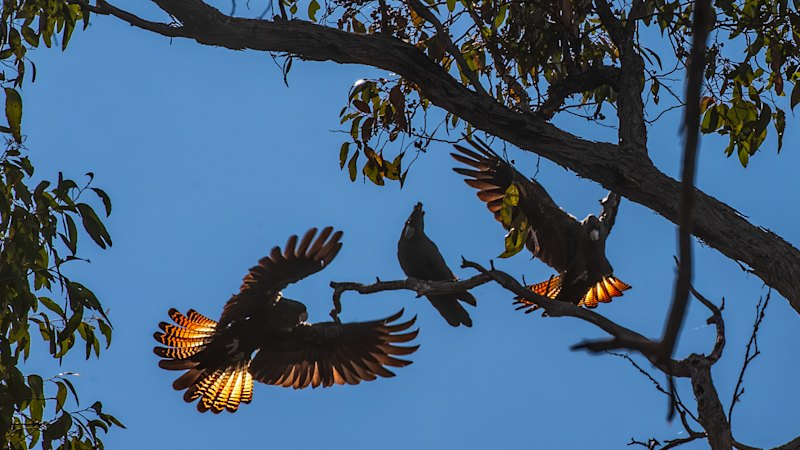
The state’s peak conservation body has put forward a suite of recommendations, including expanding the EPA and reviewing WA’s prescribed burning program.
Updated June 5, 2026 — 12:17pm,first published June 4, 2026 — 5:00am
A new report demands urgent action as it sets out to turn the tide on Western Australia’s “biodiversity crisis”.
And of immediate concern is the rate at which the state’s native vegetation is being cleared, with 51,000 hectares already approved by the state government and another 128,000 hectares in new applications, according to the Conservation Council of WA.
On Thursday, the state’s peak conservation body released Back from the Brink: A Protection Agenda for Nature, which sets out 36 recommendations for the government to act on.
Among the recommendations are calls to expand the Environmental Protection Authority’s strategic assessments, review the Biodiversity Conservation Act, limit the use of environmental offsets, and review the prescribed burning program in WA’s south-west.
CCWA executive director Matt Roberts said the report featured “real-life examples of where policy is failing nature right now, with recommendations for urgent change from experts across the environment movement”.
Roberts said the Swan Coastal Plain had seen “severe degradation” over time, but the “huge tracts of land” cleared for mining in the Pilbara was often overlooked.
“When we hear that we need some sort of fast-tracking system for industry, what we’re seeing is there are no brakes being applied to the clearing in this state,” he said.
The report was developed alongside conservation groups, Aboriginal leaders and environmental specialists as a “collaborative roadmap” for a suite of reforms.
The impact of clearing on threatened species, such as black cockatoos in the south-west and the northern quoll and ghost bat in the Pilbara, was central to the council’s concerns.
Roberts pointed to reforms to the federal Environment Protection and Biodiversity Conservation Act and a memorandum of understanding signed by Environment Minister Murray Watt and WA Premier Roger Cook in April, as examples which paved the way for a system that prioritised approvals at the expense of a proper assessment.
“The reality is we also hear rhetoric around trying to balance nature against industry, and how we can manage that,” he said.
“We have failed to manage that demonstrably for decades and decades and decades in WA.
“What we’re saying here is, if you really want to redress that balance, or you want a balance, these 36 recommendations, these are the balance on the other end of the scale.”
University of Western Australia School of Biological Sciences Professor Kingsley Dixon said the report brought together scientist
📌 Kaynak
Bu özet Sydney Morning Herald kaynağından otomatik derlenmiştir. Tamamı için orijinal habere gidin.
Orijinal haberi oku →