You are what you eat: Why Socceroos’ World Cup edge starts at the dinner table
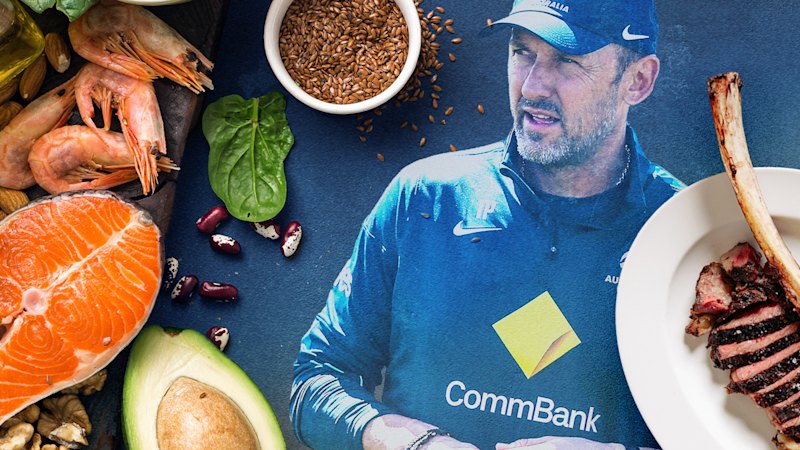
Tony Popovic was told his career was over at 23 due to injury. Instead of accepting his fate, he embarked on a journey of discovery into sports nutrition.
Oakland: Two years before he pulled on a Socceroos jersey for the first time, Tony Popovic was told his career was over.
He had just arrived at Japanese club Sanfrecce Hiroshima in 1997 when a rare and debilitating toe injury sidelined him for a season and a half. The cartilage in the joint of his big toe had worn away, creating painful bone-on-bone friction. A surgeon told him he would never play professionally again, because he didn’t think it could handle the loading required to train every day. He was 23.
Popovic’s father, Bratislav, raised him to believe in the value of hard work. His mother, Rada, was a bit of a deeper thinker. She believed that hard work was not enough; that sometimes, you need to think outside the square and search for other ways to solve a problem.
When it came to the toe injury, Popovic’s dad said he needed to work three or four times harder than anyone else to get back to playing.
“Mum would say, ‘Yes, you’ve got to do that – and you’ve got to do something different, because you’ve got to find a way,’” he says.
Popovic found a couple of ways. The injured toe was on his right foot, the one he pushed off when jumping, so he spent 18 months teaching himself how to launch off his left. On his mum’s advice, Popovic also looked into his diet, and whether changing it could improve his recovery, or change the way blood flowed around his foot, sparking a journey of discovery – one that has shaped how the Socceroos, under his guidance, have approached this World Cup.
Back then, footballers still largely followed old-school sporting wisdom: for example, eat a big plate of pasta the night before a game. But Popovic did his own research and became fascinated by alternative schools of thought, including theories connecting diet to ancestry and genetics.
His parents grew up in a part of Croatia where people had to hunt for food and store it for the year. They would eat some meat in the morning, and that would be their only meal; the “good fat” on it gave them enough energy to work through the rest of the day.
“If that could be done then, why am I eating pasta as my way of trying to fuel?” Popovic said. “When you see all the diets, the Atkins diet and all these things – back then they didn’t call it that, but it was something very similar that I did. I started studying all of that, and it started making more sense to me.”
Whatever he ate or drank obviously worked on his toe, because the best days of Popovic’s playing career were all ahead of him. But the experience sparked a personal obsession with finding every possible competitive
📌 Kaynak
Bu özet Sydney Morning Herald kaynağından otomatik derlenmiştir. Tamamı için orijinal habere gidin.
Orijinal haberi oku →