Delhi Gymkhana Club: A battle of public and private rights
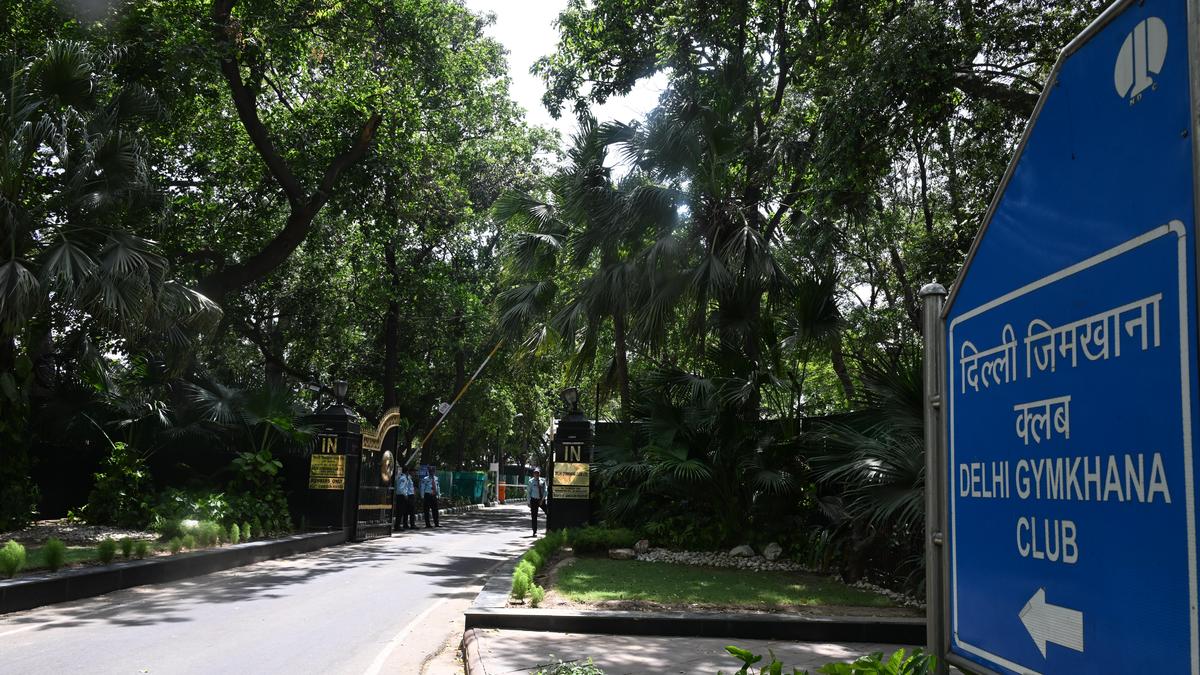
Members of the club include the National Capital’s high-heeled, such as politicians, business tycoons, and celebrities.
Account subscription benefits alongside Premium Stories, Editorials, Opinions and more. Unlock these with Subscription
The View From India Looking at World Affairs from the Indian perspective.
First Day First Show News and reviews from the world of cinema and streaming.
Today's Cache Your download of the top 5 technology stories of the day.
Data Point Decoding the headlines with facts, figures, and numbers
Health Matters Ramya Kannan writes to you on getting to good health, and staying there
The Hindu On Books Books of the week, reviews, excerpts, new titles and features.
A view of Delhi Gymkhana Club, | Photo Credit: Sushil Kumar Verma
Delhi Gymkhana Club has been asked to vacate its premises. The Central Government, on May 22, 2026, had directed the highly exclusive club to hand over possession and vacate its 27.3-acre land by June 5. This has sparked a legal, ethical, and social media battle between public and private rights.
The Delhi Gymkhana Club is an exclusive member-only private recreational space, located in the heart of India’s capital, in an area informally called “Lutyen’s Delhi.”
The club has seen the end of British colonial rule, Partition and the opening of India’s economy to the world. Throughout its history, the Gymkhana has been slammed for being elitist, exclusionary, and exploitative.
Its patrons include the capital’s high-heeled, such as politicians, business tycoons, and celebrities.
A map showing the 23-acres of the Delhi Gymkhana Club in New Delhi.
The one-time membership fee for the club at the time of publication is approximately ₹5.5 lakh for government employees and ₹22 lakh for non-government employees, with a waiting period exceeding three decades. It also charges a one-time ₹ 7.5 lakh fee for being on the waitlist. The club’s website does not explicitly state the fee structure.
Built in the style of the Connaught Place circle and Teen Murti Bhavan, the club features a 1930s swimming pool named after the wife of a former Viceroy of India, called the “Lady Willingdon Swimming Bath.”
But all is not shiny. In 2014, the club was accused by the Delhi government of tax fraud worth ₹2.92 crore. Delhi’s Pollution Control Committee had also ordered its closure for using borewells illegally.
The National Green Tribunal stepped in and imposed a fine of ₹5 lakh.
In 2020, the club courted controversy when the Ministry of Corporate Affairs noted several inconsistencies in the irregular way of membership allotment. The waiting period at the time was reportedly 37 years.
The Central government has defended the move to vac
📌 Kaynak
Bu özet The Hindu (IN) kaynağından otomatik derlenmiştir. Tamamı için orijinal habere gidin.
Orijinal haberi oku →