The deeply contentious debate around what it means to be English
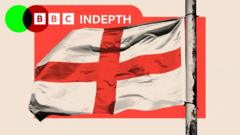
The debate about English identity has been a perennial one but has now taken on a harder edge
A friendly dragon is waddling along the sun-drenched centre of Swindon, smiling at passers-by. It's St George's Day and the blow-up dragon is on hand, along with Swindon's town crier, to do a bit of PR on behalf of England.
Mid-morning shoppers give the dragon, who was, of course, slain in the legend by England's patron saint, sympathetic looks.
Fay Howard, the then mayor of Swindon, arranged the April parade because she felt the English could do more to celebrate their national day.
The mayor posed for pictures with shoppers in a mock picture frame decorated in the English national colours of red and white. But, ahead of the May elections, there was no sign of the Cross of St George flag.
"I've been careful about using the flag this year because it is an election time and because I represent everybody in Swindon and I want to be fair to everybody in Swindon."
There, in a nutshell, is the dilemma around English identity: a mayor seeking to bring her community together but nervous that the nation's flag could be seen as divisive.
And that sensitivity comes as the perennial debate about English identity has taken on a harder edge since February last year. Influential figures on the right have provoked a highly contentious debate by saying that English identity cannot be acquired. It is, to them, related to ancestry, potentially dating back centuries.
The striking moment last year came when the Russian-born podcaster Konstantin Kisin suggested that Rishi Sunak could be considered British but not English because he is a "brown Hindu". Kisin made his remarks after the political journalist Fraser Nelson told him on the "Triggernometry" podcast that the Southampton-born former Conservative prime minister is as English as "Tizer and Y-Fronts".
A short while after that podcast, the former Conservative home secretary, Suella Braverman, described herself as 'British Asian' but not English. Braverman, who was born in England of Indian heritage, questioned in a Daily Telegraph column how many generations it could take to become English, raising the prospect that it could be as many as five or six.
Englishness can evoke two broad emotions: a benign feeling or divisiveness.
English warmth is epitomised in the lines of its unofficial anthem of Jerusalem: "And did those feet in ancient time, Walk upon England's mountains green".
Flags can appear in the spirit of those balmy emotions – cue the World Cup. But sometimes English flags are associated with different emotions. Some took exception to the Raising the Colours campaign last summer when English and Union
📌 Kaynak
Bu özet BBC News UK kaynağından otomatik derlenmiştir. Tamamı için orijinal habere gidin.
Orijinal haberi oku →