Rumors and mistrust persist over Ebola outbreak
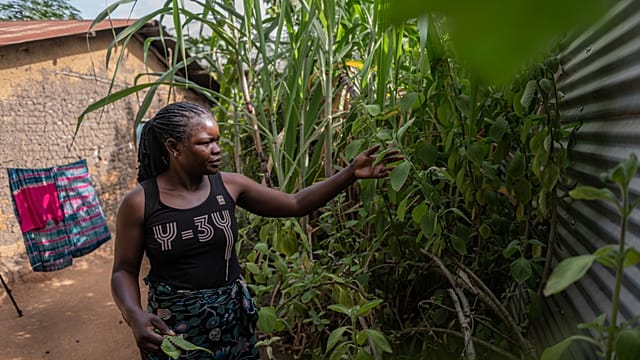
As eastern DR Congo battles a new Ebola outbreak, rumors and mistrust continue to complicate the response.
Various rumors and mistrust have persisted in the eastern Democratic Republic of the Congo as the region battles an Ebola outbreak. Like many people in eastern Congo, Chantie Joe Kiss has struggled to make sense of the outbreak that has swept through Ituri province over the past month.
The 31-year-old mother of two spent her mornings tending a garden of aloe vera plants, a remedy her family relied on for generations. "But now, with the epidemic here, if we go to the hospital they talk about Ebola. But this plant helped us before,” she said. She lamented that there were so many rumors about Ebola that people don’t know what to believe.
“The rumors I hear are that people don't believe Ebola exists, and now people are afraid to go to the hospital,” she said. “If someone dies in the hospital, they assume it was Ebola and take the body themselves to bury it as they see fit. Families no longer have the freedom to bury their loved ones as they used to.”
The outbreak have caught health authorities off guard, too. Initial testing focused on more common strains of Ebola rather than the Bundibugyo virus responsible for the current outbreak. By the time officials declared the outbreak on May 15, dozens of people had died and the virus had been spreading undetected for weeks.
Because Ebola victims remained highly infectious after death, authorities must oversee burials, preventing families from carrying out traditional funeral rites. “We don’t even know what the body of someone who died of Ebola looks like,” said another Bunia resident, Chantal Francine. But funerals weren’t the only thing causing strife.
Others spoke of rumors that Western NGOs made up Ebola to get funding, or rumors that an Ebola vaccine would be given to people to infect them with the disease. Multiple people told The Associated Press that they heard Ebola was being sent into local homes through the sewage system. The mistrust reflected deeper grievances in a region battered by decades of conflict and displacement.
Eastern Congo has become home to one of the world's largest humanitarian crises, with millions uprooted by violence. Limited access to education, healthcare and government services has left many feeling abandoned by both authorities and the international community. At the Mont Bleu TV and radio station in Bunia, radio host Verite Johnson has been trying to make a difference. He said he believed the media has a role to play in bringing people to understand the gravity of the outbreak.
"The epidemic is here, the authorities have declared that the epidemic exists,” he said. “We are
📌 Kaynak
Bu özet Africanews kaynağından otomatik derlenmiştir. Tamamı için orijinal habere gidin.
Orijinal haberi oku →