How to use the anti-HIV jab — and where to find it
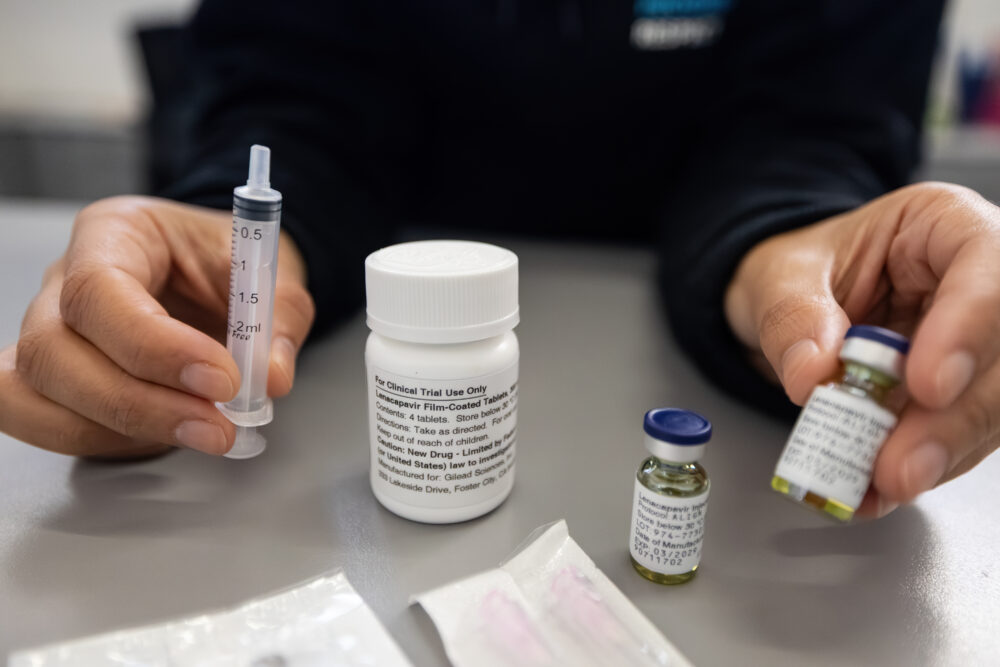
The six-monthly anti-HIV jab, which prevents HIV through sex, is now stocked for free at 360 government clinics in six of South Africa’s provinces. The provinces are Gauteng, KwaZulu-Natal, the Eastern Cape, Mpumalanga, North West and the Western Cape, according to the health department’s list of clinics . The Northern Cape, Limpopo and the Free State will get jabs next year, when cheaper generic versions of LEN become available and South Africa starts rolling out the shot on
The six-monthly anti-HIV jab, which prevents HIV through sex, is now stocked for free at 360 government clinics in six of South Africa’s provinces. The provinces are Gauteng, KwaZulu-Natal, the Eastern Cape, Mpumalanga, North West and the Western Cape, according to the health department’s list of clinics . The Northern Cape, Limpopo and the Free State will get jabs next year, when cheaper generic versions of LEN become available and South Africa starts rolling out the shot on a larger scale. At least one generic drug maker, Hetero in India , has applied to register their product with South Africa’s Health Products Regulatory Authority (Sahpra) chief executive Boitumelo Semete-Makokotlela told Bhekisisa. Semete-Makokotlela says this will be a priority review which will be completed in 180 working days (around eight months), in this case by the end of January 2027. Lenacapavir , in short referred to as LEN, is almost foolproof in protecting HIV-negative people against the virus and has to be taken only twice a year. LEN-FACILITIES-BY-PROVINCE-2-1 Download If enough HIV-negative people take the shot — between one and two million HIV-negative people need to take LEN at least once a year between now and 2043 — Wits modelling scientists predict that South Africa could stop new infections fast enough to end Aids as a big public health problem in 18 years. That, they say, could result in South Africa’s approximately 140 000 new HIV infections in 2025 being reduced to about 65 000 a year so that the rate of new infections decreases to 0.1% or below. But to achieve this, the country needs between 18 million and 36 million LEN doses in total over the period 2026 to 2043. South Africa has received only two LEN deliveries — 37 920 doses (via two consignments on 30 March and 2 April) and 19 800 doses on 7 April — of the branded version of the medicine made by Gilead Sciences, paid for with a grant from the Global Fund to Fight Aids, TB and Malaria. The fund says the third delivery of 57 600 doses is expected to land at OR Tambo on 15 June, which would bring the total number of delivered doses to 115 320. In total, the fund has promised the country just under a million branded doses ( 974 450 ) — enough to phase in and keep 456 360 people on the medication — over two years. The doses come to between 3% and 5.5% of the total number of doses the country needs to end Aids by 2043. Samples of each Global Fund consignment have to be quality tested before distribution to the health department’s provincial depots. As South Africa doesn’t yet have accredited labs to conduct quality testing, LEN’s maker, Gilead Sciences, sends samples to its lab in Cork in Ireland, a process which it says takes about a month . The first batch has been cleared and the 7 April delivery is undergoing testing. Activists are unhappy about the time quality testing takes , arguing that Gilead should apply for exemption from Sahpra for the process or accredit a South African lab to do the testing. Once generics become available in 2027, the health department says it will start to buy LEN with its own budget on a much larger scale but how much it plans to buy has not been announced. The South African National Aids Council, Sanac, has asked local drug companies to submit proposals to make LEN locally . The council’s chief executive, Thembi Xulu, says a committee is evaluating the proposals and will submit a shortlist of companies that can either make LEN from start to scratch or perform aspects of the manufacturing process to Gilead for consideration for generic licences by the end of June. LEN is not yet available in the private sector — Gilead has not registered a private sector price in South Africa — and will probably become available at private facilities only once generics have hit the market. How does the jab work, how do you know if you need it and where can you find it? We’ve got you covered with 13 questions and answers. How does LEN work? HIV needs to replicate to survive but, like other viruses, it can’t stay alive on its own. In humans it hijacks a type of immune cell called a CD-4 cell and worms itself into its DNA, forcing the cell to make copies of the virus instead of itself. LEN is called a capsid inhibitor, which means it messes with HIV’s shell around its genes — called a capsid — in a way that makes it hard for the virus to get into someone’s CD-4 cells . LEN is injected into the fatty layer of an HIV-negative person’s tummy once every six months and is near perfect in preventing someone from getting the virus through sex. The injection leaves a small supply of medicine, called a depot, under the skin that slowly releases the drug over six months. (That’s why the medicine needs to be taken only once every six months.) Remember: LEN only prevents HIV infection; it doesn’t prevent someone from getting any other sexually transmitted germ. Is
📌 Kaynak
Bu özet Mail & Guardian (ZA) kaynağından otomatik derlenmiştir. Tamamı için orijinal habere gidin.
Orijinal haberi oku →