The elusive search for Australia’s next grand slam champion
Ash Barty retired four years ago, and 24 years have passed since Lleyton Hewitt won the Wimbledon singles title. How is Tennis Australia’s development pathway tracking?
Tennis Australia’s performance boss Tim Jolley is confident the country’s future in the sport is bright, but acknowledges there is a “gap” between an ageing men’s crop and the next generation.
As the Craig Tiley era ends and TA’s new chief executive Andrew Abdo prepares to start on August 3, the entire operation, from the Australian Open to the development pathway, particularly whether it can produce our next grand slam champion, is under the microscope.
“We want as many Aussies competing in the top 10 on the men’s and women’s tours as possible, so thinking about talent development is critical,” Abdo said last week.
Almost 1.4 million fans came through Melbourne Park’s gates in January, but 1987 Wimbledon champion Pat Cash wants more attention on the grassroots game, private coaches and junior development.
No Australian junior made it past the second round at this year’s Australian Open, while there are only three Australian men younger than 25 in the top 500, and the Davis Cup and Billie Jean King Cup teams both suffered disappointing first-round defeats.
Top-10 star and seven-time major quarter-finalist Alex de Minaur continues to do the heavy lifting, four years after triple grand slam champion Ash Barty’s retirement.
Much is resting on Lleyton Hewitt’s 17-year-old son, Cruz, realising his potential, at least among this next wave of men.
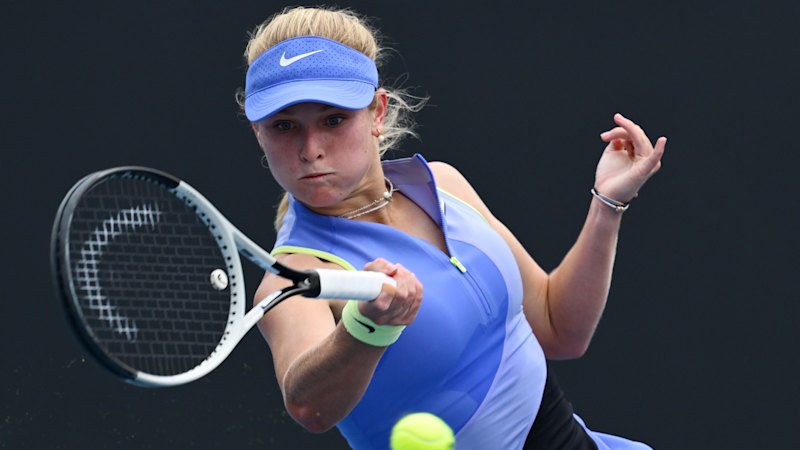
The women’s stocks are healthier. Maya Joint, Talia Gibson, Emerson Jones and Taylah Preston are all 21 or younger and performing well.
But Jolley told this masthead that, in his view, a closer look under the hood presented a rosier picture, including 14 different players spending time inside the top 100 of the ATP and WTA rankings last year.
“That number was the highest we’ve had since 1989,” said Jolley, who has been in his role since 2020.
“It’s been a reasonably linear progression to that peak since 2005, when the most transformative change was made to player development in Australia, where the co-ordination of player development was centralised, which Craig Tiley did when he joined the business.
“We’ve got strength in our pipeline of juniors as well. I think we’ve got 30 players in the top 15 in their birth year in the junior rankings [on Universal Tennis Rating].”
The UTR system, which TA has invested in, provides every player with a rating independent of age, gender or nationality, using an algorithm based on head-to-head results.
A beginner usually sits between one and four, while a professional player is typically 12 or higher, including world No.1 Jannik Sinner being at 16.4.
Jolley describes T
📌 Kaynak
Bu özet Sydney Morning Herald kaynağından otomatik derlenmiştir. Tamamı için orijinal habere gidin.
Orijinal haberi oku →