Targeting US$610 billion longevity market, biotech firms race to reverse ageing
For Beijing-based METiS TechBio CEO Lai Tsai-ta, ageing is comparable to bugs building up in a complex software system – it happens once errors begin to accumulate in the genetic code of human cells, such as their DNA sequences. “Those errors can be reprogrammed. It becomes possible to use AI to read, rewrite and reverse cells, or at least slow the ageing process,” Lai said in an interview with the South China Morning Post. The process could begin by fixing “immune cells, suc
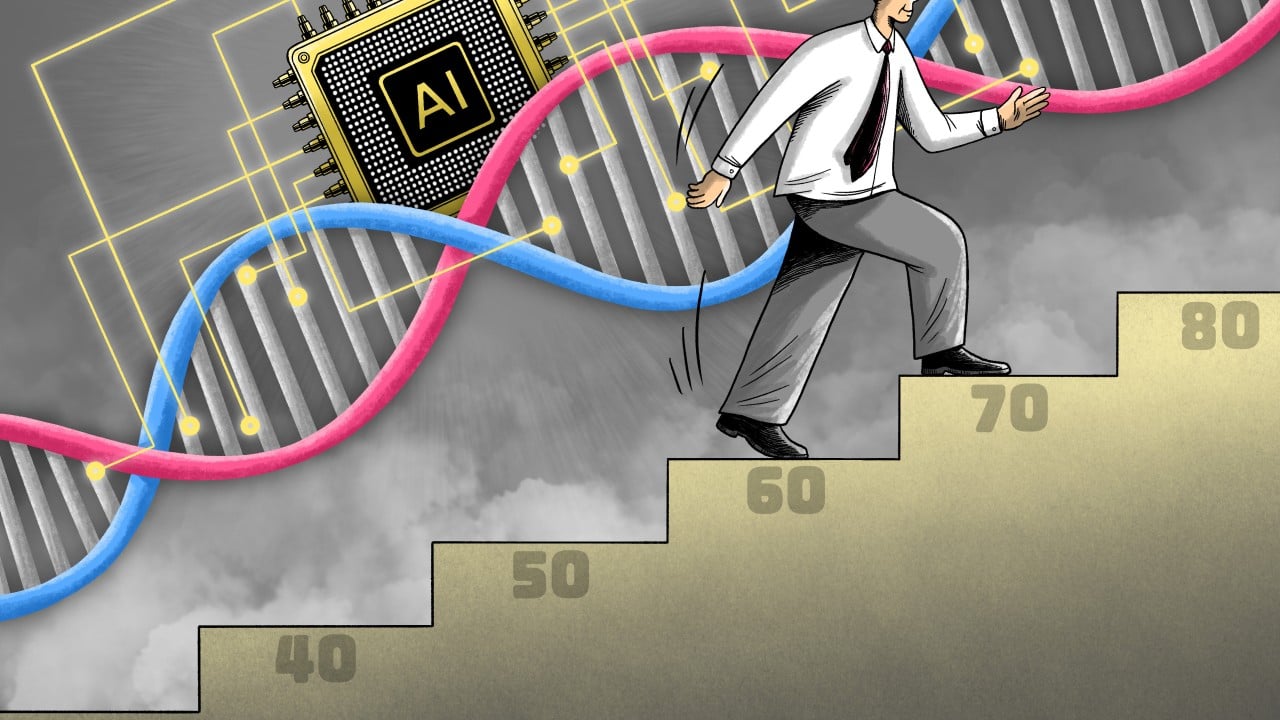
AI is transforming longevity as companies like METiS TechBio and Human Longevity use algorithms to combat ageing and predict health risks
“Those errors can be reprogrammed. It becomes possible to use AI to read, rewrite and reverse cells, or at least slow the ageing process,” Lai said in an interview with the South China Morning Post.
The process could begin by fixing “immune cells, such as T cells, as their function declines after old age. That is why older people become more susceptible to cancer and all kinds of disease,” he added.
Although the field is still in the early stages of development, advances have been made quickly. The United States is currently the global leader in cellular reprogramming for anti-ageing and longevity, driven by massive, multibillion-dollar private investments and research and development.
It also accounts for 57 per cent of all global longevity companies and 84 per cent of total deal volume, according to a report published by Longevity Technology in 2024. Global investment in the sector amounted to US$8.49 billion, it said.
📌 Kaynak
Bu özet SCMP China kaynağından otomatik derlenmiştir. Tamamı için orijinal habere gidin.
Orijinal haberi oku →