Tiny X-ray telescope could unlock the Moon's hidden chemistry
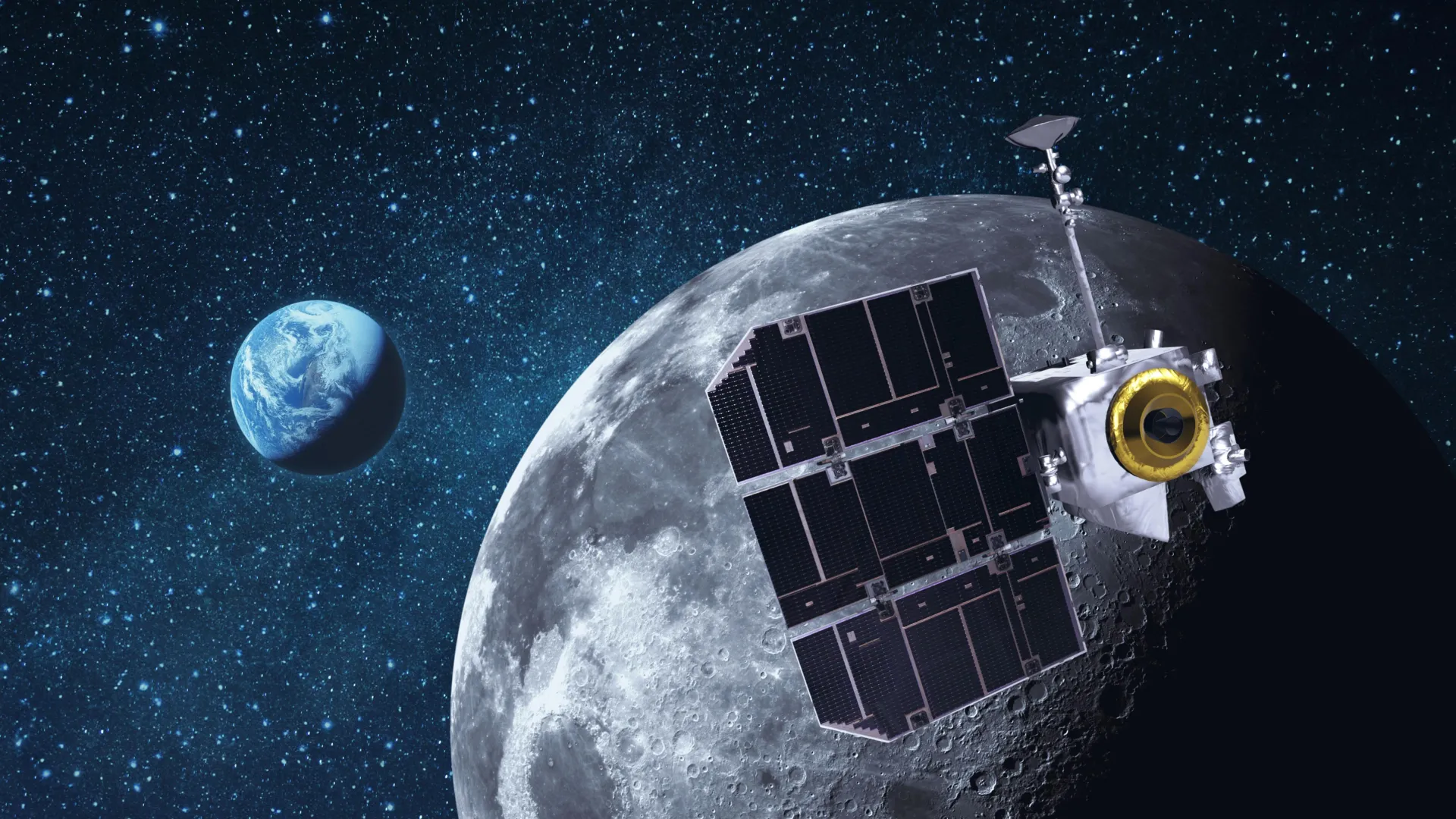
A lightweight new X-ray telescope could finally give scientists something theyâve never had before: a complete chemical map of the Moon. Researchers used detailed mission simulations to show that a compact telescope orbiting the Moon could identify key elements across the entire lunar surface, helping reveal how the Moon formed and evolved.
Researchers at Tokyo Metropolitan University have used simulations to show that a small, newly developed X-ray telescope could help create a chemical map of the entire lunar surface. Such a map would be a major step toward understanding how the Moon formed, changed, and evolved over time.
Their detailed modeling, which included both the telescope detector and a realistic Moon orbiting satellite mission, suggests that one telescope could map five important elements in about two years. A larger five by five array of detectors could produce sharper maps and complete the work more quickly.
The Moon's geological history is still not fully understood. One major reason is that scientists do not yet have a complete geochemical map of the lunar surface. Because researchers cannot simply collect samples from every part of the Moon, they must rely on remote sensing methods.
One of these methods is X-ray fluorescence imaging. In this approach, detectors are pointed at the Moon to capture X-rays emitted by specific elements after they are struck by solar radiation. Those signals can help reveal which elements are present across different regions of the surface.
Earlier observations from the Apollo and Chandrayaan missions produced useful partial maps, but a full global map is still missing. Creating one is technically difficult for several reasons. Missions have limited time to gather enough sunlight driven X-ray signals, and detectors can degrade during long periods in space.
The problem is especially difficult near the Moon's poles. In these regions, solar X-rays are weaker, which makes it harder to collect the signals needed to identify surface elements.
To address these obstacles, a team led by Airi Toida and Prof. Yuichiro Ezoe of Tokyo Metropolitan University has proposed using a compact X-ray telescope on a satellite orbiting the Moon. The telescope would allow wide area observations of the lunar surface during strong solar flares, when the Sun provides more intense X-ray illumination.
Traditional X-ray telescopes are often too large and heavy for this type of mission. By contrast, the team's compact telescope was originally designed for studying Earth's magnetosphere and weighs less than ten kilograms. Its small size could make it practical for long term lunar satellite observations.
The detector has also been tested in radiation conditions far harsher than those expected in lunar orbit. That durability could support robust, wide area, high resolution imaging over an extended mission.
The researchers then added the telescope's specifications into a n
📌 Kaynak
Bu özet ScienceDaily Tech kaynağından otomatik derlenmiştir. Tamamı için orijinal habere gidin.
Orijinal haberi oku →