Xiaomi: From Takeoff to Turbulence — Where It Soared and Where It Fell
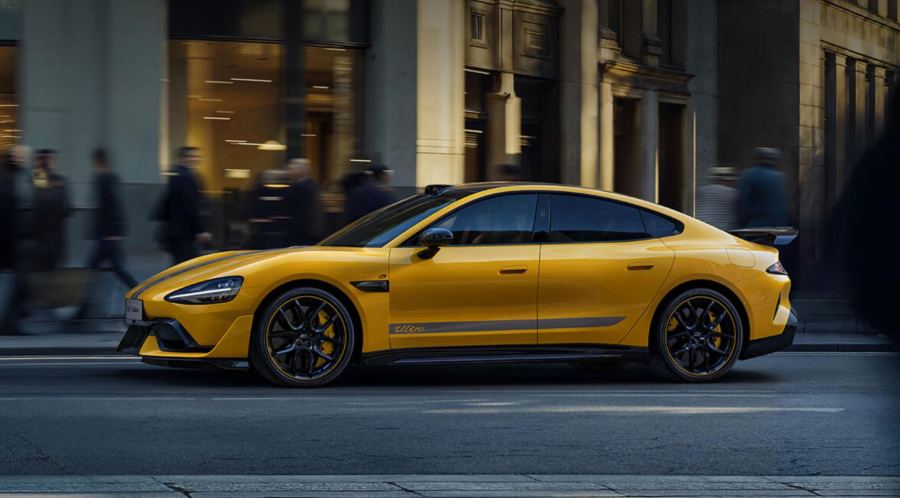
Xiaomi's stock has long been a study in extremes. After years trading below 12 HKD, the Shenzhen-born tech giant embarked on an extraordinary rally that pushed shares past 60 HKD — a five-fold surge that made it one of the most talked-about names on the Hong Kong Exchange. Yet today, at roughly 28 HKD, the stock has surrendered more than half those gains, leaving investors to ask whether the bull case was ever as solid as it seemed. The catalyst was undeniable. Xiaomi's SU7 e
Xiaomi's stock has long been a study in extremes. After years trading below 12 HKD, the Shenzhen-born tech giant embarked on an extraordinary rally that pushed shares past 60 HKD — a five-fold surge that made it one of the most talked-about names on the Hong Kong Exchange. Yet today, at roughly 28 HKD, the stock has surrendered more than half those gains, leaving investors to ask whether the bull case was ever as solid as it seemed. The catalyst was undeniable. Xiaomi's SU7 electric sedan, launched in early 2024, defied every skeptic. Orders flooded in, the car became a social media phenomenon, and Lei Jun's personal brand pulled off what few smartphone makers have ever managed — a successful leap into four wheels. The SU7 did more than sell cars; it created a brand halo that lifted Xiaomi's entire valuation. Suddenly, the company was no longer an Android phone assembler with thin margins. It was a contender in the world's most competitive EV market, competing with Tesla and BYD. Investors priced in a new growth story. But the glow has faded. The SU7's momentum, while real, faces the blunt arithmetic of the auto industry. Margins in China's EV sector are razor-thin and shrinking. Price wars, subsidy unwinding, and capacity gluts have turned a growth narrative into a margin squeeze before the ink on the SU7's order books is even dry. Xiaomi's second EV, the YU7 SUV, generated 289,000 reservations in its first hour — yet that euphoria has since given way to cooler reality, with early delivery data suggesting demand has softened as competitors crowd the segment. Meanwhile, the core business remains unchanged. Xiaomi is still an Android smartphone maker operating on single-digit margins in a market where Huawei is clawing back share and domestic rivals are fighting a price war on memory and components. Recent data shows Xiaomi's China smartphone share dipping, squeezed by Huawei's resurgence and Honor's aggressive push. For all the EV excitement, smartphones still generate the bulk of Xiaomi's revenue and profit — and that foundation is showing cracks. The broader lesson is sobering. Xiaomi's stock ran ahead of its fundamentals because the SU7 offered a narrative of transformation. But narratives eventually meet margins. The auto business demands immense capital, delivers thin returns in a crowded market, and provides no escape from the structural limits of Xiaomi's hardware-centric model. The stock's retreat from 60 HKD to 28 HKD is not a buying opportunity — it is a reality check.
📌 Kaynak
Bu özet Pandaily kaynağından otomatik derlenmiştir. Tamamı için orijinal habere gidin.
Orijinal haberi oku →