The Download: how the World Cup ball will fly and OpenAI’s “super app”
This is today’s edition of The Download , our weekday newsletter that provides a daily dose of what’s going on in the world of technology. Why this year’s World Cup ball may not fly as far Much is new about this month’s FIFA World Cup tournament. It hosts more teams than ever before. It’s the first to occur in three different host countries. And, like every World Cup for over half a century, it will employ a football with a brand-new design. Through wind-tunnel experiments, r
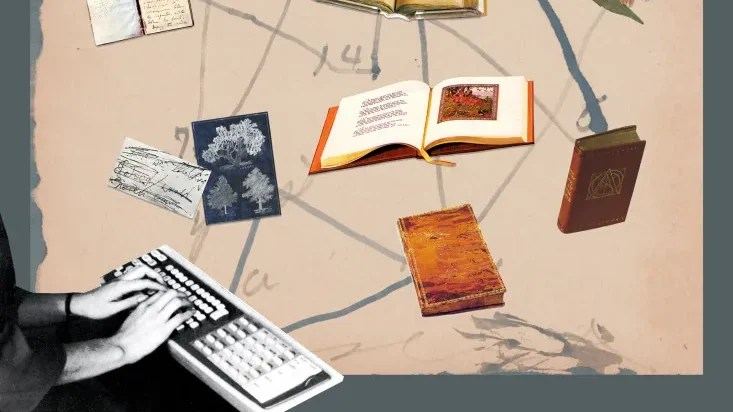
This is today’s edition of The Download , our weekday newsletter that provides a daily dose of what’s going on in the world of technology. Why this year’s World Cup ball may not fly as far Much is new about this month’s FIFA World Cup tournament. It hosts more teams than ever before. It’s the first to occur in three different host countries. And, like every World Cup for over half a century, it will employ a football with a brand-new design. Through wind-tunnel experiments, researchers found that long-distance kicks with Adidas’s new Trionda ball might not travel as far as they did in the past. The payoff is a more predictable flight path, something players have not always enjoyed from World Cup balls. Find out how a few grooves and seams can change the way the game is played . —Jenna Ahart The must-reads I’ve combed the internet to find you today’s most fun/important/scary/fascinating stories about technology. 1 OpenAI plans to turn ChatGPT into a ‘super app’ before its IPO The revamp would combine coding tools and AI agents. ( Financial Times $) + The super app ambitions first emerged last year. ( Fast Company ) + OpenAI is also building a fully automated researcher. ( MIT Technology Review ) 2 Trump wants the US government to take a stake in AI companies He will meet AI leaders to discuss the plan. ( BBC ) + Which would create “a partnership with the American public.” ( Reuters $) + He wants a slice of the AI boom. ( Axios ) 3 Google has agreed to pay SpaceX $30 billion for AI computing power The $920 million-a-month contract runs through June 2029. ( NYT $) + Google will use about 110,000 Nvidia GPUs owned by SpaceX. ( CNBC ) + It comes days after Anthropic struck a SpaceX data center deal. ( WSJ $) 4 AI is set to make everyday life more expensive Its insatiable thirst for resources is likely to push up inflation. ( WP $) + We did the math on AI’s energy footprint. ( MIT Technology Review ) 5 Europe is accelerating its withdrawal from US Big Tech New analysis reveals dozens of moves to alternative providers. ( Wired $) + Last week, the EU launched a “made in Europe” drive. ( Reuters $) 6 ICE plans to give local police a new facial recognition app It would allow them to verify a person’s immigration status. ( 404 Media ) + Is the Pentagon allowed to surveil Americans with AI? ( MIT Technology Review ) 7 Silicon Valley’s lure is fading for India’s tech talent Due to Trump’s immigration policies and AI-driven layoffs. ( Rest of World ) 8 ‘Recursive self-improvement’ has sparked fears of AI escaping control Nobody is sure about the consequences of RSI. ( The Economist $) + Here are five ways that AI is learning to improve itself. ( MIT Technology Review ) 9 Gene-edited embryos are getting closer, but a key safety gap remains Current techniques still fail to edit every cell. ( New Scientist $) + “Base-edited baby” is one of our 10 Breakthrough Technologies for 2026. ( MIT Technology Review ) 10 NASA astronauts will wear high-tech Prada underwear on their moon trips Ventilation tubes are knitted into the garments. ( The Verge ) Quote of the day “Chat is dead.” —A senior OpenAI employee tells the Financial Times why the company is shifting focus from chatbots to AI agents. One More Thing BETH HOECKEL How AI is helping historians better understand our past The digitization of historical records is making it possible to study the past in new ways. Historians are now using machine learning—particularly deep neural networks—to analyze everything from centuries-old astronomy textbooks to ancient Greek inscriptions. The technology is helping researchers uncover new patterns in the historical record. But it also introduces risks, including the possibility that machine learning will slip bias or outright falsifications into our understanding of the past. Read the full story on how AI is transforming the study of history. —Moira Donovan We can still have nice things A place for comfort, fun, and distraction to brighten up your day. (Got any ideas? Drop me a line .) + Take a tour of extinct everyday objects to travel back to pre-smartphone life. + This a cappella cover of “I Want To Know What Love Is” nails the power-ballad drama. + Korea’s ingenious “one-a-day” banana packs are designed so each one ripens sequentially. + Casino dialogue has been synced over Looney Tunes footage in this unexpectedly perfect mashup.
📌 Kaynak
Bu özet MIT Technology Review kaynağından otomatik derlenmiştir. Tamamı için orijinal habere gidin.
Orijinal haberi oku →